
Crown Hair Loss
Crown hair loss refers to thinning or balding that develops around the vertex, or crown, of the scalp. It commonly results from androgenetic alopecia but may also relate to stress, hormonal changes, nutritional deficiencies or certain medical conditions. Early diagnosis improves treatment options and may slow further hair loss.

What is Crown Hair Loss?
Crown hair loss describes gradual thinning that affects the top rear section of the scalp. This area is commonly known as the crown or vertex. Many people first notice reduced density when viewing photographs or looking into mirrors under bright lighting. Others recognise the condition after family members observe increased scalp visibility. Unlike a receding hairline, crown hair loss often develops unnoticed because the affected area remains difficult to inspect without assistance.
The condition affects both men and women, although the underlying patterns often differ. Men usually experience progressive thinning caused by androgenetic alopecia. This inherited condition increases follicle sensitivity to dihydrotestosterone, commonly called DHT. Women may also develop crown thinning, but hormonal fluctuations, ageing, pregnancy, menopause and nutritional deficiencies frequently contribute. Some medical conditions may produce similar symptoms, making professional assessment important before selecting treatment.
Crown hair loss should not always be viewed as permanent. Some individuals experience temporary shedding linked to stress, illness or medication. Others develop progressive follicle miniaturisation that requires medical intervention. Identifying the underlying cause remains the most important step before beginning any treatment programme.
Why Does Hair Loss Often Start at the Crown?
The crown contains hair follicles that may respond differently to hormonal influences than follicles located elsewhere on the scalp. Individuals with genetic sensitivity to DHT often notice thinning in this region before other areas become affected. Over time, susceptible follicles gradually produce finer hairs until visible scalp exposure appears. This biological process explains why the crown commonly represents one of the earliest signs of male pattern hair loss.
Another factor involves the natural spiral arrangement of crown hair. The hair grows around a central whorl, making even small reductions in density easier to notice. Lighting conditions frequently exaggerate this appearance. Many people mistake a normal crown whorl for balding, while others overlook genuine thinning until significant follicle miniaturisation has already occurred.
Although genetics remain the most common explanation, other factors deserve consideration. Chronic stress, nutritional deficiencies, thyroid disorders, autoimmune conditions and certain medications may contribute to thinning around the crown. A careful medical history, combined with scalp examination, helps distinguish temporary shedding from progressive androgenetic alopecia.
How Common is Crown Hair Loss?
Crown hair loss represents one of the most frequently reported concerns among adults seeking hair restoration advice. Male pattern hair loss affects millions of men throughout the United Kingdom, with the crown and frontal hairline representing the two most common areas of progression. Women also experience crown thinning, although the pattern usually appears more diffuse than localised.
Age increases the likelihood of developing visible thinning, but crown hair loss may begin much earlier than many people expect. Some men first recognise subtle changes during their twenties. Others notice progressive thinning during their thirties or forties. Early recognition offers the greatest opportunity to preserve existing follicles before permanent loss develops.
Family history significantly influences individual risk. People with close relatives affected by androgenetic alopecia often develop similar patterns. However, genetic inheritance does not guarantee identical progression. Lifestyle factors, general health, hormonal balance and timely treatment all influence the speed and severity of crown hair loss.
Quick Clinical Overview

From a clinical perspective, crown hair loss should never be assessed using appearance alone. Similar visual changes may arise from several different conditions, including androgenetic alopecia, telogen effluvium, alopecia areata, traction alopecia and nutritional deficiencies. Effective treatment depends upon identifying the correct diagnosis rather than simply responding to visible thinning.
Modern assessment often combines clinical examination with digital scalp imaging, dermoscopy or trichoscopy. These techniques allow specialists to evaluate follicle health, hair shaft diameter and early signs of follicle miniaturisation. Blood investigations may also prove valuable when hormonal imbalance, iron deficiency or thyroid dysfunction remains suspected.
At Mediwell Hair Clinic, understanding the underlying cause forms the foundation of every personalised treatment plan. Patients benefit from evidence-based recommendations designed to preserve existing hair whenever possible while considering long-term restoration goals.
Key Takeaways
| Clinical Question | Quick Answer |
|---|---|
| What is crown hair loss? | Progressive thinning affecting the vertex area of the scalp. |
| Is it always permanent? | No. Temporary and permanent causes both exist. |
| Who develops it? | Both men and women. |
| What causes it most often? | Androgenetic alopecia and DHT sensitivity. |
| Can early treatment help? | Yes. Early intervention improves treatment possibilities. |
What Causes Crown Hair Loss?
Crown hair loss develops when healthy hair follicles become damaged, inactive or progressively shrink over time. The most common cause is androgenetic alopecia, where genetically sensitive follicles respond to dihydrotestosterone (DHT). However, hormonal changes, chronic stress, nutritional deficiencies, certain medical conditions and some medications may also contribute to thinning around the crown. Identifying the underlying cause is essential because treatment depends on the reason for hair loss rather than the appearance alone.
Crown hair loss rarely has a single explanation. While genetics remain the leading factor, many biological and environmental influences may affect hair growth simultaneously. Some people inherit follicles that become increasingly sensitive to DHT. Others experience temporary shedding following illness, surgery or significant emotional stress. Understanding the difference between temporary shedding and progressive follicle miniaturisation allows treatment to begin before irreversible damage occurs.
The crown often reveals thinning earlier than other scalp regions because its natural spiral growth pattern exposes reduced density more easily. As neighbouring hairs become finer, the scalp reflects more light, creating the impression of a widening bald spot. Many individuals only recognise these subtle changes after comparing older photographs or noticing increased visibility under bright lighting.
A professional assessment remains important because several different conditions may produce similar symptoms. An accurate diagnosis helps avoid unnecessary treatments while ensuring the most appropriate management plan is selected.
Understanding the Hair Growth Cycle
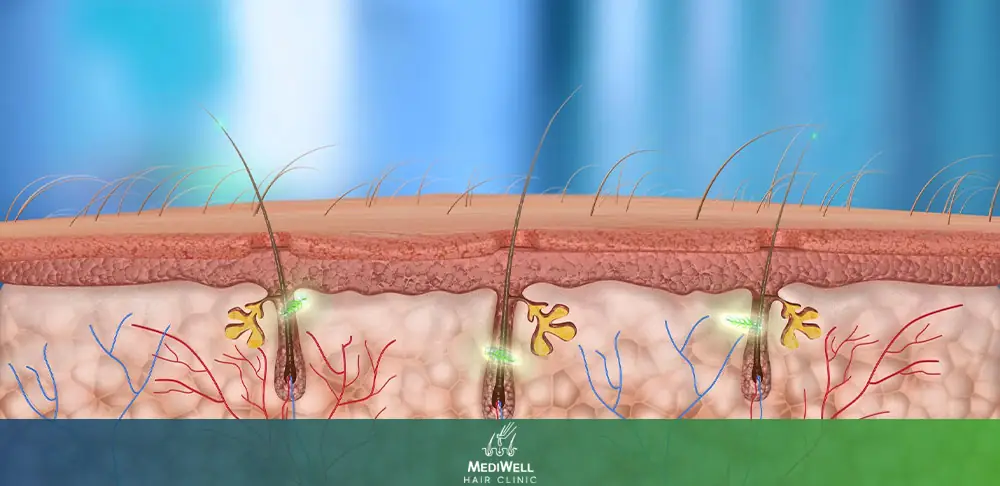
Healthy hair follows a continuous growth cycle consisting of several distinct phases. Every follicle operates independently, allowing different hairs to grow, rest and shed at different times. This natural process maintains overall hair density throughout life. When the cycle becomes disrupted, the crown often demonstrates the earliest visible changes.
Anagen – The Active Growth Phase
The anagen phase represents the period of active hair production. During this stage, cells within the follicle divide rapidly, producing new hair fibres. Depending on genetics and overall health, this phase may last between two and seven years. Longer anagen phases generally produce thicker and longer hair.
Individuals affected by androgenetic alopecia often experience a gradual shortening of the anagen phase. As each cycle becomes shorter, the resulting hairs grow thinner and weaker. Over several years, this process contributes to visible crown thinning.
Catagen – The Transition Phase
Catagen is a short transitional stage lasting only a few weeks. Hair growth slows while the follicle prepares for its resting period. Although this phase is brief, it forms an essential part of the normal hair cycle.
Telogen – The Resting Phase
During the telogen phase, the follicle temporarily stops producing new hair. Existing hairs remain attached until naturally released. Increased numbers of follicles entering telogen simultaneously may lead to noticeable shedding, particularly after illness, childbirth or severe emotional stress.
Exogen – Natural Hair Shedding
Exogen refers to the shedding of mature hairs before new growth begins. Losing between fifty and one hundred hairs daily generally falls within the normal range. Persistent increases, however, may indicate an underlying condition requiring professional assessment.
Understanding the complete hair cycle explains why successful treatment often requires patience. New hairs cannot appear immediately because follicles need time to complete each biological phase.
The Role of DHT in Crown Hair Loss
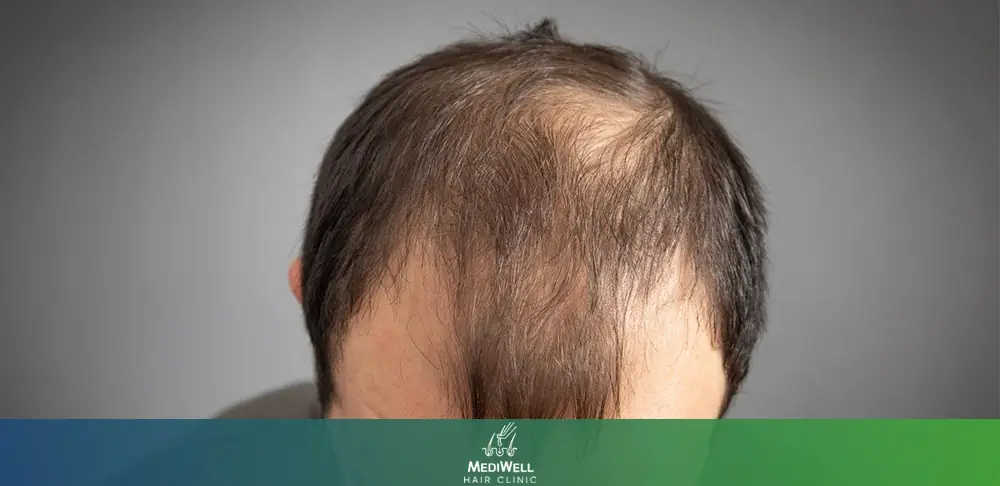
Dihydrotestosterone, commonly known as DHT, plays the most significant role in androgenetic alopecia. DHT is produced when the enzyme 5-alpha reductase converts testosterone into a more biologically active hormone. Although DHT performs several important functions within the body, genetically susceptible hair follicles respond differently to its presence.
In sensitive individuals, DHT gradually causes hair follicles to shrink. This process, called follicle miniaturisation, reduces the size of each new hair produced during every growth cycle. Thick terminal hairs slowly become finer until they resemble soft, almost invisible hairs. Eventually, some follicles stop producing visible hair altogether.
The crown and frontal hairline contain greater numbers of DHT-sensitive follicles than many other scalp regions. This explains why these areas frequently thin first while the donor region remains relatively resistant. Modern medical treatments often aim to reduce DHT activity or improve follicle function before permanent loss occurs.
Importantly, DHT does not cause hair loss in everyone. Genetic susceptibility determines whether follicles respond to hormonal exposure. Two individuals with similar hormone levels may therefore experience completely different patterns of hair loss.
Male pattern hair loss (androgenetic alopecia) is associated with genetic susceptibility and the effects of dihydrotestosterone (DHT), which gradually causes hair follicle miniaturisation.
Source: British Association of Dermatologists – Male Pattern Hair Loss
Hair Follicle Miniaturisation Explained
Hair follicle miniaturisation represents the hallmark feature of androgenetic alopecia. Rather than falling out suddenly, affected follicles gradually produce progressively thinner hairs with each new growth cycle. This process often develops slowly over many years, making early changes difficult to recognise.
Initially, hair density appears largely unchanged because the number of follicles remains similar. However, each individual hair becomes finer. Reduced diameter allows more light to reflect from the scalp, making thinning appear greater than the actual reduction in follicle numbers. This explains why many patients notice increased scalp visibility before experiencing significant hair shedding.
Miniaturisation also affects hair length. Shorter growth cycles prevent hairs from reaching their previous thickness and length. As neighbouring follicles continue shrinking, the crown gradually loses volume. Without appropriate intervention, some follicles may eventually become inactive, limiting the potential for natural regrowth.
Early diagnosis offers the greatest opportunity to slow this process. Medical therapies generally produce better outcomes while follicles remain active rather than after permanent follicle loss has occurred.
Temporary vs Permanent Crown Hair Loss
Many people assume all crown hair loss is permanent. In reality, temporary and permanent conditions may produce remarkably similar symptoms during their early stages. Distinguishing between these possibilities remains one of the most important aspects of diagnosis.
| Condition | Temporary | Permanent | Treatment Potential |
|---|---|---|---|
| Telogen Effluvium | ✅ | ❌ | Excellent |
| Nutritional Deficiency | ✅ | ❌ | Excellent |
| Stress-related Shedding | ✅ | ❌ | Very Good |
| Thyroid Disorders | ✅ | ❌ | Very Good |
| Androgenetic Alopecia | ❌ | Progressive | Excellent when treated early |
| Scarring Alopecia | ❌ | Often Permanent | Limited |
Temporary shedding usually occurs after a specific trigger, such as illness, surgery, childbirth, rapid weight loss or severe emotional stress. Once the underlying issue resolves, normal hair growth often resumes within several months.
Permanent hair loss develops differently. Progressive follicle miniaturisation gradually reduces hair density over time. Early intervention remains critical because inactive follicles become increasingly difficult to restore.
Why is the Crown More Vulnerable Than Other Areas?
The crown possesses several characteristics that make thinning more noticeable than elsewhere on the scalp. Firstly, the natural hair whorl creates multiple directions of growth. Even minor reductions in density expose greater areas of scalp, particularly under overhead lighting.
Secondly, crown follicles often demonstrate greater sensitivity to DHT. This biological difference explains why many individuals first notice thinning around the vertex despite maintaining a relatively stable frontal hairline. As miniaturisation progresses, surrounding hairs lose both thickness and structural support, further reducing overall volume.
Finally, many people overlook the crown during routine grooming because it remains difficult to inspect without mirrors or photographs. This delayed recognition frequently allows androgenetic alopecia to progress before treatment begins. Regular self-monitoring and professional assessments can therefore play an important role in preserving existing hair.
What are the Early Signs of Crown Hair Loss?
The earliest signs of crown hair loss include reduced hair density, increased scalp visibility under bright light, finer hair texture around the crown and a widening natural hair whorl. Early changes are often subtle and may appear months or even years before noticeable baldness develops. Recognising these signs early increases the likelihood of preserving existing hair through timely treatment.
Crown hair loss rarely begins with a sudden bald patch. Instead, it usually develops gradually through progressive follicle miniaturisation. Many individuals continue to grow hair in the affected area, but each new strand becomes thinner than the previous one. This gradual reduction in hair diameter creates the illusion of reduced density, even before significant shedding occurs.
Lighting often reveals the first visible changes. Bright overhead lighting, direct sunlight or high-resolution photographs may expose the scalp more clearly than everyday mirrors. Because the crown naturally reflects light, even a small reduction in density becomes easier to detect. Many patients report noticing thinning only after comparing recent photographs with older images.
Hair styling may also become more difficult. The crown may lose volume, appear flatter or separate more easily throughout the day. These changes often occur long before family members recognise obvious hair loss.
Crown Hair Loss Timeline
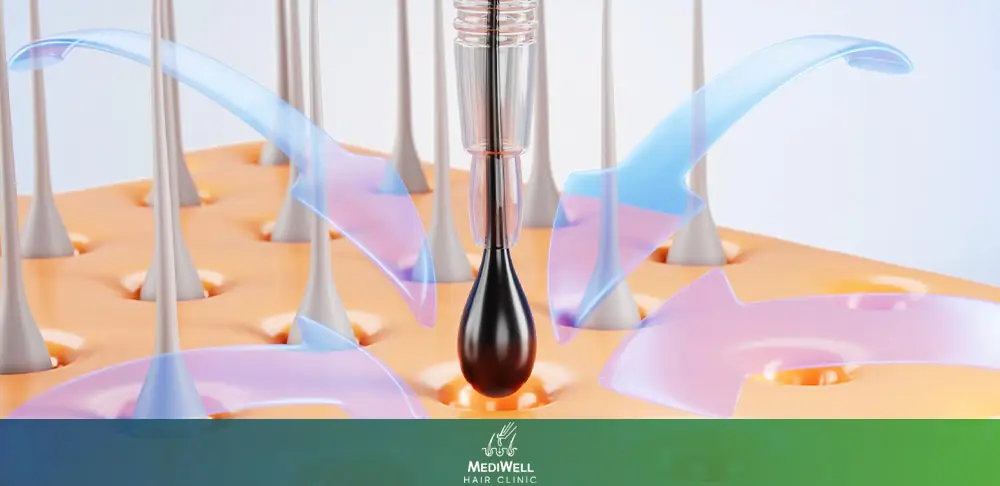
Crown hair loss usually progresses slowly over several years. Early thinning often begins with subtle miniaturisation before advancing to visible scalp exposure. Without appropriate treatment, progressive follicle shrinkage may eventually result in permanent baldness.
Understanding how crown hair loss develops helps patients recognise the importance of early intervention. Although progression varies between individuals, androgenetic alopecia generally follows a predictable biological pattern.
Stage One – Invisible Changes
During the earliest stage, hair follicles remain active but begin producing finer hairs. Hair density appears largely unchanged, making diagnosis difficult without magnified scalp examination. Patients rarely notice any visible difference.
Stage Two – Early Crown Thinning
Hair shafts continue becoming thinner while overall volume gradually decreases. Bright lighting reveals increased scalp visibility, particularly around the centre of the crown. The natural hair whorl begins appearing wider than before.
Stage Three – Noticeable Bald Spot
As miniaturisation progresses, neighbouring hairs lose both thickness and structural support. The crown becomes visibly thinner from multiple viewing angles. Hair styling becomes increasingly difficult because surrounding hairs provide less natural coverage.
Stage Four – Advanced Crown Baldness
Long-term follicle miniaturisation may eventually result in significant scalp exposure. Some follicles stop producing visible hair altogether. At this stage, medical therapy may still preserve remaining hair, but surgical restoration often becomes an important consideration for suitable candidates.
Recognising these stages encourages earlier assessment and may improve long-term treatment outcomes.
Understanding the Norwood Scale and Crown Balding
The Norwood Scale is the most widely recognised classification system for male pattern hair loss. It allows specialists to evaluate the severity and progression of androgenetic alopecia. Several stages specifically involve crown thinning, making the system valuable when planning treatment.
Early crown involvement often appears around Norwood Stage III Vertex. At this point, a small area of thinning develops around the crown while the frontal hairline may remain relatively stable. As progression continues, the thinning region gradually enlarges and may eventually connect with frontal recession during later stages.
The Norwood Scale should not be viewed as a prediction of inevitable progression. Many individuals remain within the same stage for several years, particularly when appropriate medical treatment begins early. Others experience faster progression because of stronger genetic susceptibility or delayed intervention.
For women, alternative classification systems such as the Ludwig Scale more accurately describe diffuse thinning patterns, particularly around the central scalp and crown.

Crown Hair Loss in Women
Women can also develop crown hair loss, although the pattern often differs from male baldness. Instead of a clearly defined bald spot, women usually experience diffuse thinning across the crown while maintaining the frontal hairline. Hormonal changes, menopause, iron deficiency, thyroid disorders and genetic factors commonly contribute.
Female crown hair loss often develops gradually, making early diagnosis difficult. Many women first notice reduced hair volume when styling their hair or widening of the central parting. Increased scalp visibility around the crown may become more apparent under bright lighting.
Unlike men, women rarely experience complete baldness from androgenetic alopecia alone. Nevertheless, progressive thinning may significantly affect confidence and quality of life. Professional assessment remains essential because several medical conditions can mimic female pattern hair loss.
Treatment options depend upon the underlying diagnosis. Medical therapies, nutritional correction and selected hair restoration procedures may all play important roles within an individualised management plan.
Further reading:
Female pattern hair loss differs from male pattern baldness and often presents as diffuse thinning across the crown while preserving the frontal hairline.
Source: British Association of Dermatologists – Female Pattern Hair Loss
Natural Crown Whorl or Bald Spot?
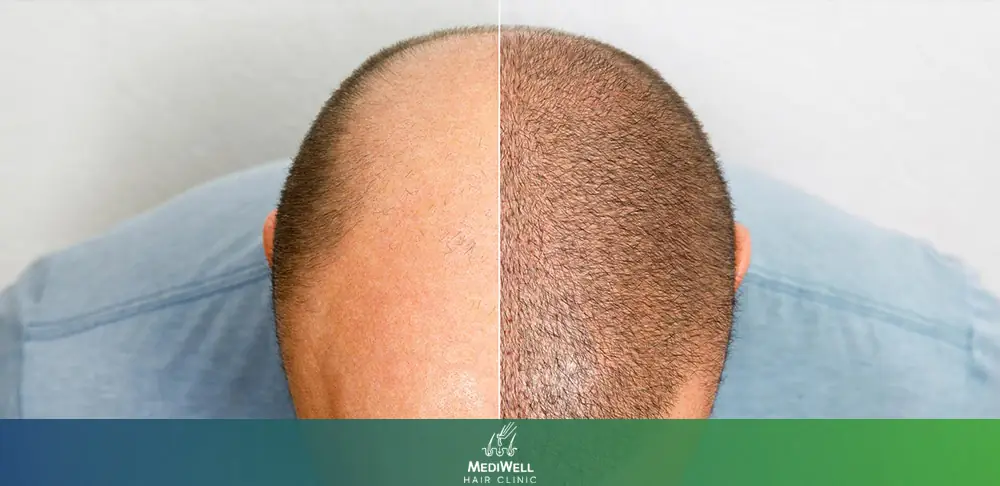
A natural crown whorl is a normal spiral pattern where hair grows in different directions. A bald spot develops when hair density progressively decreases because of follicle miniaturisation or another underlying condition. Distinguishing between these two possibilities often requires careful examination.
Many individuals become concerned after noticing increased scalp visibility around their crown. In many cases, however, the appearance simply reflects the natural arrangement of hair rather than genuine hair loss. A normal whorl usually maintains consistent hair density despite the changing direction of growth.
Progressive crown hair loss produces different characteristics. Hair surrounding the whorl gradually becomes finer, shorter and less dense. The visible scalp area slowly enlarges over time rather than remaining stable. Comparing photographs taken several months apart often helps identify progressive changes.
Digital trichoscopy provides one of the most accurate methods for distinguishing normal hair patterns from early androgenetic alopecia. By measuring hair shaft diameter and follicle variation, specialists can detect miniaturisation before obvious baldness develops.
| Natural Crown Whorl | Crown Hair Loss |
|---|---|
| Stable over time | Progressively enlarges |
| Uniform hair thickness | Mixed thick and thin hairs |
| Normal density | Reduced density |
| No miniaturisation | Miniaturised follicles present |
| Usually lifelong | Develops gradually |
Can Crown Hair Loss Be Reversed?
Some forms of crown hair loss can improve when treatment begins early. Temporary shedding often resolves after the underlying trigger disappears. Progressive androgenetic alopecia cannot usually be cured, but evidence-based treatments may slow progression, preserve existing hair and stimulate thicker growth in suitable candidates.
Reversibility depends entirely on the underlying diagnosis. Conditions such as telogen effluvium, nutritional deficiencies or thyroid disorders often improve after correcting the triggering factor. Hair follicles remain alive during these conditions, allowing normal growth to resume once the biological disturbance resolves.
Genetic crown hair loss behaves differently. Miniaturised follicles gradually lose their ability to produce healthy terminal hairs. Although medications such as Minoxidil and Finasteride may help maintain active follicles, completely inactive follicles rarely regenerate naturally. Hair transplantation therefore becomes an important option when permanent follicle loss has already occurred.
The greatest opportunity for successful treatment exists before advanced miniaturisation develops. Early assessment remains the single most important factor influencing long-term outcomes.
Clinical Insight
Patients often delay seeking professional advice because crown hair loss progresses slowly and remains difficult to observe. Unfortunately, this delay allows follicle miniaturisation to continue unchecked. Early diagnosis offers the widest range of treatment options and improves the likelihood of preserving existing hair without extensive surgical intervention.
How is Crown Hair Loss Diagnosed?

Crown hair loss should never be diagnosed solely by appearance. A thorough assessment combines medical history, scalp examination and, when appropriate, specialised diagnostic tests. Identifying the underlying cause allows clinicians to recommend the most effective treatment while avoiding unnecessary interventions.
Many patients assume every thinning crown represents male or female pattern hair loss. In reality, several medical conditions can produce similar symptoms. Temporary shedding, autoimmune disorders, nutritional deficiencies and hormonal imbalances may all affect the crown. A correct diagnosis therefore becomes the foundation of successful treatment.
During an initial consultation, a hair restoration specialist evaluates the pattern of hair loss, the speed of progression and any associated symptoms. Questions about family history, recent illness, stress, medications and dietary habits often provide valuable diagnostic clues. This comprehensive approach helps distinguish androgenetic alopecia from other forms of hair loss.
Early diagnosis remains particularly important because many treatments work best while follicles remain active. Once advanced miniaturisation has occurred, restoring natural density becomes considerably more challenging.
Clinical Assessment and Medical History
The consultation begins with a detailed discussion about when the hair loss first became noticeable and how rapidly it has progressed. Patients may be asked whether shedding developed suddenly or gradually. Sudden shedding often suggests temporary conditions such as telogen effluvium, whereas slow progression commonly indicates androgenetic alopecia.
A family history of hair loss provides valuable information because genetic predisposition remains the strongest risk factor for pattern baldness. However, genetics alone do not determine individual outcomes. Lifestyle, overall health and early intervention also influence progression.
The clinician may also review current medications, previous illnesses, recent surgery, rapid weight loss or significant emotional stress. Each of these factors can influence the normal hair growth cycle and contribute to temporary or prolonged shedding.
Photographic comparison often proves extremely useful. Reviewing older photographs alongside current images allows subtle progression to become more apparent and helps establish a realistic baseline for future treatment monitoring.
Trichoscopy and Digital Scalp Analysis
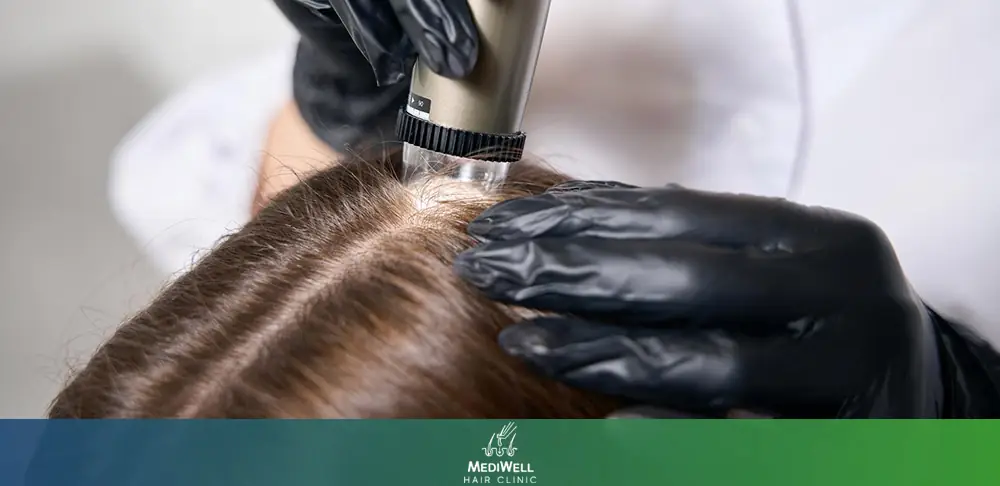
Trichoscopy is a non-invasive examination that magnifies the scalp and hair follicles. It helps identify miniaturisation, follicle density, hair shaft variation and early signs of androgenetic alopecia before advanced hair loss becomes visible.
Digital scalp analysis has become an essential diagnostic tool within modern hair restoration practice. High-magnification imaging allows clinicians to examine individual follicles in remarkable detail. This technology reveals structural changes that cannot be seen with the naked eye.
One of the most important findings involves hair shaft diameter variation. Healthy follicles generally produce hairs of similar thickness. In androgenetic alopecia, increasing variation develops because miniaturised follicles create progressively finer hairs. Detecting this process early allows treatment to begin before irreversible follicle loss occurs.
Trichoscopy also helps exclude inflammatory scalp disorders, scarring alopecia and other dermatological conditions that may require completely different management strategies.
Blood Tests That May Be Recommended
Not every patient requires blood investigations. However, laboratory testing may prove valuable when hair loss develops unexpectedly, progresses rapidly or presents alongside additional symptoms. Blood tests help identify systemic conditions that influence healthy hair growth.
Depending on the clinical assessment, investigations may include iron studies, ferritin levels, vitamin B12, vitamin D, folate and zinc. Thyroid function tests often become appropriate when symptoms suggest hormonal imbalance. Women experiencing diffuse crown thinning may also require additional hormonal evaluation depending on their medical history.
Correcting nutritional deficiencies alone may significantly improve hair growth in suitable patients. Conversely, normal blood results provide reassurance that treatment should focus upon follicle preservation rather than systemic disease.
Blood investigations should always complement clinical assessment rather than replace it. Test results require interpretation within the context of the patient’s overall health and pattern of hair loss.
Can Stress Cause Crown Hair Loss?
Yes. Severe physical or emotional stress can contribute to crown hair loss by disrupting the normal hair growth cycle. Stress most commonly causes telogen effluvium, a temporary condition in which increased numbers of follicles enter the resting phase simultaneously. However, stress does not directly cause androgenetic alopecia, although it may accelerate the appearance of existing genetic hair loss.
Stress affects the body through complex hormonal and inflammatory pathways. Major life events, prolonged illness, surgery or emotional trauma may temporarily interrupt normal follicle activity. Hair shedding usually becomes noticeable several weeks or months after the triggering event rather than immediately.
Unlike androgenetic alopecia, stress-related shedding often occurs diffusely across the scalp. Nevertheless, individuals already experiencing early crown thinning may notice the crown becoming more visible because the overall reduction in density exaggerates pre-existing miniaturisation.
Recovery frequently occurs once the underlying trigger resolves. Maintaining adequate nutrition, improving sleep quality and addressing chronic stress may all support healthier hair growth. Persistent shedding lasting longer than several months should always be professionally assessed.
Medical Conditions Associated with Crown Hair Loss
Several medical conditions may contribute to thinning around the crown. Although androgenetic alopecia remains the most common diagnosis, clinicians should consider other possibilities before confirming treatment.
Autoimmune disorders such as alopecia areata may produce well-defined patches of hair loss. Thyroid disease can alter the hair growth cycle, leading to diffuse shedding across the scalp. Chronic iron deficiency reduces oxygen delivery to rapidly dividing follicle cells, while severe nutritional deficiencies may impair normal hair production.
Scalp disorders also deserve careful evaluation. Persistent inflammation, fungal infections and certain forms of scarring alopecia can permanently damage follicles if treatment is delayed. Because several conditions resemble one another visually, professional assessment remains essential whenever the diagnosis is uncertain.
Patients should avoid self-diagnosing based solely on internet photographs. Similar appearances often have very different underlying causes and require completely different treatment strategies.
Lifestyle Factors That Influence Crown Hair Loss
Lifestyle cannot usually overcome strong genetic predisposition, but it may influence how quickly thinning becomes noticeable. Smoking reduces blood flow to the scalp and increases oxidative stress, potentially affecting follicle health over time. Excessive alcohol consumption, poor sleep quality and prolonged psychological stress may also interfere with normal hair growth.
Nutrition plays an equally important role. Hair follicles require adequate protein, iron, zinc, vitamin D and several B vitamins to function efficiently. Restrictive diets and rapid weight loss may temporarily interrupt the growth cycle, resulting in increased shedding several months later.
Regular physical activity supports overall circulation and metabolic health, although exercise alone cannot prevent androgenetic alopecia. Healthy lifestyle choices should therefore complement evidence-based medical treatments rather than replace them.
Common Myths About Crown Hair Loss
Many misconceptions continue to surround crown hair loss, delaying appropriate treatment and creating unnecessary anxiety. Separating scientific evidence from popular myths helps patients make informed decisions.
| Myth | Fact |
|---|---|
| Wearing hats causes crown hair loss. | No scientific evidence supports this claim. |
| Poor shampoo causes permanent baldness. | Shampoo rarely causes androgenetic alopecia. |
| Hair loss always comes from the mother's family. | Genetics may be inherited from either parent. |
| Stress permanently destroys hair follicles. | Stress usually causes temporary shedding. |
| Hair transplantation prevents future hair loss. | Surgery restores hair but does not stop ongoing genetic thinning. |
Understanding these misconceptions allows patients to focus on treatments supported by clinical evidence rather than unsupported advice found online.
When Should You See a Hair Restoration Specialist?
You should consider professional assessment whenever crown hair loss continues for several months, progresses rapidly or becomes increasingly noticeable. Early evaluation provides the greatest opportunity to preserve existing follicles and identify reversible causes before permanent changes develop.
A specialist consultation becomes particularly valuable when there is uncertainty about the diagnosis. Conditions such as telogen effluvium, androgenetic alopecia, thyroid disease and nutritional deficiencies may appear similar during the early stages. Accurate diagnosis ensures that treatment addresses the underlying cause rather than simply masking visible symptoms.
At Mediwell Hair Clinic, every treatment plan begins with a comprehensive assessment of scalp health, hair density and long-term restoration goals. By combining clinical examination with advanced diagnostic techniques, personalised recommendations can be developed based on each patient’s individual pattern of crown hair loss.
Best Treatments for Crown Hair Loss
The best treatment for crown hair loss depends on the underlying cause, the stage of hair loss and the health of the remaining follicles. Early androgenetic alopecia often responds well to evidence-based medical therapies, while advanced crown baldness may require a hair transplant to restore natural density. A personalised treatment plan offers the best opportunity to preserve existing hair and achieve long-term results.
No single treatment works equally well for everyone. Factors such as age, genetic predisposition, overall health and the extent of follicle miniaturisation all influence treatment outcomes. For this reason, crown hair loss should always be assessed individually rather than treated using a standard approach.
Modern hair restoration usually combines several therapies. Medical treatments aim to preserve existing follicles, while surgical restoration addresses areas where follicles have become permanently inactive. Combining these approaches often provides more predictable long-term results than relying on a single treatment alone.
Early intervention remains one of the most important predictors of success. Active follicles generally respond more favourably than follicles that have already undergone advanced miniaturisation.
Minoxidil for Crown Hair Loss
Minoxidil is one of the most widely used treatments for crown hair loss. It works by prolonging the hair growth phase and improving follicle activity. While it does not cure androgenetic alopecia, it may help slow progression and increase hair density in suitable patients.
Minoxidil is available in topical and oral forms. Topical solutions are commonly applied directly to the scalp once or twice daily. Oral Minoxidil may be considered in selected patients under medical supervision. Both approaches require consistent use because stopping treatment usually allows progressive hair loss to resume.
The crown often responds better to Minoxidil than the frontal hairline. This is thought to relate to differences in follicle biology and blood supply. Results usually become noticeable after several months rather than weeks, making patient expectations an important part of treatment planning.
Some individuals experience temporary increased shedding during the first weeks of treatment. This phenomenon often reflects the normal transition of weaker hairs into a new growth cycle rather than treatment failure.
Finasteride and Dutasteride
Finasteride and Dutasteride reduce the production of dihydrotestosterone (DHT), the hormone most closely associated with androgenetic alopecia. By lowering DHT levels, these medications help slow follicle miniaturisation and preserve existing hair in suitable patients.
Finasteride is commonly prescribed for male pattern hair loss and has been extensively studied. Dutasteride inhibits additional forms of the 5-alpha reductase enzyme and may provide greater DHT suppression in selected individuals. The choice between these medications depends upon clinical assessment, individual suitability and potential side effects.
Neither medication creates new follicles. Instead, they aim to maintain existing follicles for as long as possible. Patients should discuss potential benefits and risks with a qualified healthcare professional before beginning treatment.
Treatment requires patience because follicle biology changes gradually. Most patients require several months before meaningful improvements become visible.
Platelet-Rich Plasma (PRP) Therapy
Platelet-Rich Plasma (PRP) therapy uses concentrated platelets from the patient’s own blood to support follicle health. PRP may improve hair quality and density in selected patients with early crown hair loss, particularly when combined with other evidence-based treatments.
The procedure begins by collecting a small blood sample. The sample is processed to separate platelet-rich plasma before being injected into targeted scalp areas. Platelets contain growth factors that may support tissue repair and follicle function.
PRP does not replace lost follicles and should not be considered a cure for advanced baldness. Instead, it may help improve the performance of follicles that remain biologically active. Results vary between individuals, making realistic expectations essential.
Many specialists recommend PRP as part of a broader treatment strategy rather than as a standalone solution.
Low-Level Laser Therapy (LLLT)
Low-Level Laser Therapy uses specific wavelengths of light to stimulate cellular activity within hair follicles. Although the exact biological mechanisms continue to be studied, research suggests that LLLT may improve follicle metabolism and support hair growth in selected individuals.
LLLT devices include laser caps, helmets and combs designed for home use. Treatment requires regular application over several months. While some patients experience increased hair density, results generally remain modest compared with comprehensive medical treatment.
Because LLLT is non-invasive and well tolerated, it may represent a useful complementary therapy within a personalised treatment programme.
Microneedling for Crown Hair Loss
Microneedling creates controlled microscopic channels within the scalp using fine needles. These tiny injuries stimulate the natural healing response and may improve the absorption of topical medications such as Minoxidil.
Several studies suggest that combining microneedling with medical therapy may produce greater improvements than medication alone in selected patients. However, treatment should be performed according to appropriate clinical protocols to minimise complications.
Microneedling does not create new follicles but may enhance the biological environment surrounding existing follicles.
Medical Treatments vs Hair Transplant Surgery
Choosing between medical therapy and surgical restoration depends upon follicle health, hair density and long-term treatment goals. Medical treatments aim to preserve existing hair, while hair transplantation restores density in areas where follicles have become permanently inactive.
Patients with early crown thinning often benefit from evidence-based medications before considering surgery. Preserving existing follicles reduces future progression and may improve the overall appearance of the scalp.
When advanced crown baldness has developed, medical therapy alone rarely restores the lost density. Hair transplantation becomes the most effective option for redistributing healthy follicles from the donor area to the crown.
In many cases, combining surgery with ongoing medical treatment produces the most stable long-term outcome.
Evidence-Based Treatment Comparison
| Treatment | Best For | Scientific Evidence | Recovery | Goal |
|---|---|---|---|---|
| Minoxidil | Early thinning | Strong | None | Improve density |
| Finasteride | Male pattern hair loss | Strong | None | Reduce DHT |
| Dutasteride | Selected patients | Moderate to Strong | None | Greater DHT suppression |
| PRP Therapy | Early to moderate thinning | Moderate | Minimal | Support follicle function |
| LLLT | Mild thinning | Moderate | None | Complement treatment |
| Microneedling | Combination therapy | Moderate | Minimal | Enhance treatment response |
| Hair Transplant | Advanced crown baldness | Strong | Short recovery | Restore permanent density |
Can Crown Hair Loss Grow Back with Treatment?
Some forms of crown hair loss can improve significantly with appropriate treatment. The likelihood of regrowth depends on whether follicles remain biologically active. Miniaturised follicles often respond better than follicles that have become permanently inactive.
Patients frequently expect rapid improvement, but hair restoration requires time. Hair grows slowly, and follicles must complete multiple growth cycles before meaningful changes become visible. Most evidence-based treatments require several months before results can be properly assessed.
Medical therapy works best during the early stages of androgenetic alopecia. Hair transplantation becomes more appropriate when large areas of permanent follicle loss have already developed. Regardless of the chosen treatment, realistic expectations and ongoing follow-up remain essential for achieving sustainable outcomes.
Clinical Insight
Successful crown hair loss treatment is rarely based on a single intervention. Modern hair restoration focuses on preserving healthy follicles, slowing future progression and restoring natural density when required. A personalised treatment strategy offers the greatest opportunity for long-term success while maintaining a natural appearance.
Hair Transplant for Crown Hair Loss
A hair transplant can be one of the most effective long-term solutions for advanced crown hair loss when follicles no longer produce healthy hair. The procedure redistributes permanent hair follicles from the donor area to the thinning crown, creating natural coverage while preserving the patient’s existing hair pattern.
Unlike temporary cosmetic solutions, a hair transplant addresses permanent follicle loss by relocating healthy follicular units that are genetically resistant to DHT. These donor follicles typically continue growing after transplantation, allowing the restored crown to blend naturally with surrounding hair over time.
The crown presents unique challenges compared with the frontal hairline. Hair grows in multiple directions around the natural whorl, making graft placement considerably more complex. Achieving a natural appearance requires careful planning of graft angles, density distribution and hair direction. For this reason, crown restoration should always be approached with a long-term strategy rather than simply maximising graft numbers.
Although a hair transplant can restore density, it does not stop the progression of androgenetic alopecia in untreated native hair. Many patients therefore benefit from combining surgery with appropriate medical treatment to protect existing follicles and maintain balanced long-term results.
When is a Hair Transplant the Right Choice?
A hair transplant becomes appropriate when crown hair loss has progressed beyond the point where medical treatment alone can restore satisfactory density. The ideal candidate has stable donor hair, realistic expectations and sufficient healthy follicles available for transplantation.
Not every patient requires immediate surgery. Individuals experiencing early crown thinning often achieve meaningful improvements through evidence-based medical therapies before considering transplantation. Surgery should generally complement, rather than replace, a comprehensive treatment strategy.
A detailed consultation evaluates several important factors. These include the pattern of hair loss, donor area quality, scalp characteristics, age, family history and the likelihood of future progression. Younger patients require particularly careful planning because ongoing hair loss may continue after transplantation.
A personalised approach ensures that donor hair is used efficiently while preserving options for any future procedures that may become necessary.
How Many Grafts Are Needed for Crown Hair Loss?
The number of grafts required depends on the size of the thinning area, the desired density, hair characteristics and the quality of the donor area. Crown restoration usually requires careful distribution of grafts rather than simply transplanting the highest possible number.
The following guide illustrates typical planning ranges.
| Degree of Crown Hair Loss | Estimated Grafts |
|---|---|
| Mild Crown Thinning | 800–1,200 grafts |
| Moderate Crown Hair Loss | 1,200–2,000 grafts |
| Advanced Crown Baldness | 2,000–3,000+ grafts |
These figures should be viewed as general estimates rather than guarantees. Every patient presents unique anatomical characteristics, including hair calibre, curl, colour contrast and donor density. These variables influence how much visual coverage can be achieved with a given number of grafts.
An experienced surgeon also considers the possibility of future hair loss. Conserving donor follicles remains essential because they represent a limited lifetime resource. Responsible graft planning focuses on achieving natural-looking density while maintaining flexibility for long-term restoration.
FUE vs DHI for Crown Hair Restoration
Both Follicular Unit Extraction (FUE) and Direct Hair Implantation (DHI) can produce excellent results for crown hair loss. The most appropriate technique depends on the patient’s hair characteristics, treatment goals and the surgeon’s clinical assessment rather than the technique alone.
FUE involves extracting individual follicular units before creating recipient sites that determine the angle, direction and density of implanted grafts. This approach offers excellent flexibility for designing the complex spiral pattern required within the crown.
DHI uses a specialised implantation device that allows graft placement immediately after extraction. In selected patients, this technique may provide additional precision during implantation while reducing the time grafts remain outside the body.
Neither technique should be viewed as universally superior. Natural results depend far more on surgical planning, graft handling and artistic understanding of crown anatomy than on marketing terminology. Choosing an experienced hair restoration team remains considerably more important than selecting a specific implantation method.
| Feature | FUE | DHI |
|---|---|---|
| Follicle Extraction | Individual units | Individual units |
| Implantation Method | Prepared recipient sites | Direct implantation device |
| Suitable for Crown | Excellent | Excellent |
| Natural Results | Highly dependent on planning | Highly dependent on planning |
| Long-Term Outcome | Comparable when performed well | Comparable when performed well |
Recovery following crown hair transplantation occurs gradually because newly implanted follicles require time to establish a healthy blood supply before producing new hair. Understanding this timeline helps patients maintain realistic expectations throughout the healing process.
| Recovery Stage | Typical Progress |
|---|---|
| First Week | Mild redness and small scabs develop before healing. |
| Weeks Two to Four | Transplanted hairs commonly shed as follicles enter a resting phase. |
| Months Three to Four | Early new growth begins to appear. |
| Months Six to Nine | Noticeable improvement in density and overall coverage. |
| Months Twelve to Eighteen | Final maturation and natural thickening continue. |
Temporary shedding during the first month often causes unnecessary concern. This stage forms part of the normal biological healing process rather than indicating treatment failure. The follicles remain alive beneath the skin and gradually re-enter the active growth phase.
Because crown hair naturally grows in multiple directions, final cosmetic improvement may continue for longer than hairline procedures. Patience remains an important part of the recovery journey.
Before and After Expectations
Hair transplantation aims to improve density rather than recreate the hair volume experienced during adolescence. Modern restoration focuses on achieving natural coverage that remains appropriate throughout future ageing and ongoing hair loss.
Several factors influence the final appearance. Hair thickness, natural wave, colour contrast between hair and scalp, donor density and the size of the recipient area all contribute to the visual outcome. Patients with thicker hair often achieve greater coverage using fewer grafts, while fine hair may require more strategic planning.
Equally important is the preservation of realistic expectations. Successful surgery should create harmony between the restored crown, surrounding native hair and future progression of androgenetic alopecia. Long-term planning always takes priority over short-term cosmetic density.
Factors That Influence Hair Transplant Results
No two patients achieve identical outcomes because several biological and technical factors influence the final result.
Key considerations include:
- The quality and density of the donor area.
- The extent of existing crown hair loss.
- Hair shaft thickness and natural curl.
- Scalp elasticity and healing response.
- Long-term stability of androgenetic alopecia.
- Surgical planning and graft placement.
- Post-operative care and adherence to clinical advice.
The expertise of the surgical team also plays a significant role. Accurate angle placement, careful graft handling and respect for the natural crown whorl help create results that appear consistent from every viewing angle.
Why Long-Term Planning Matters
Crown restoration should always be planned with the future in mind. Pattern hair loss often continues gradually over many years. Restoring the crown without considering future progression may create an unnatural appearance if surrounding native hair continues to thin.
A responsible long-term strategy balances immediate cosmetic improvement with preservation of donor resources. This approach allows additional procedures to remain possible if they become necessary later in life.
At Mediwell Hair Clinic, every treatment plan is designed around long-term naturalness rather than short-term density alone. Careful assessment of donor reserves, future progression and individual goals helps ensure that each restoration remains harmonious as hair loss evolves over time.
Clinical Insight
The crown is one of the most technically demanding areas in hair transplantation. Successful restoration depends on much more than graft numbers. Understanding the natural spiral pattern, respecting follicle direction and planning for future hair loss are essential for achieving results that continue to look natural for many years.
Why Choose Mediwell Hair Clinic for Crown Hair Loss Treatment?
Choosing the right clinic is just as important as choosing the right treatment. Successful crown hair loss management requires accurate diagnosis, personalised planning and long-term follow-up. At Mediwell Hair Clinic, every treatment plan is tailored to the patient’s pattern of hair loss, donor characteristics and future restoration goals.
Crown hair restoration demands both medical knowledge and surgical precision. Unlike the frontal hairline, the crown contains a natural spiral growth pattern that requires careful graft placement from every angle. Creating natural density depends on understanding hair direction, follicular distribution and long-term progression rather than simply implanting the highest number of grafts.
At Mediwell Hair Clinic, treatment recommendations are based on clinical assessment rather than a one-size-fits-all approach. Patients may benefit from medical therapies, regenerative treatments, hair transplantation or a combination of these options. Every recommendation is designed to preserve healthy follicles whenever possible while planning for future hair loss.
Patient education also forms an important part of the consultation process. Understanding the causes of crown hair loss, expected treatment timelines and realistic outcomes allows patients to make informed decisions with confidence.
A Personalised Treatment Journey
Every patient presents with different hair characteristics, expectations and long-term goals. For this reason, crown hair loss should never be managed using identical treatment plans. Personalised assessment allows each stage of care to reflect the patient’s individual needs.
The journey begins with a comprehensive consultation that evaluates scalp health, donor hair quality, hair density and the pattern of thinning. This information helps determine whether medical treatment, surgical restoration or combined therapy offers the greatest long-term benefit.
Once a treatment plan has been agreed, patients receive clear guidance regarding preparation, recovery and realistic expectations. Regular follow-up allows progress to be monitored while treatment strategies are adjusted when necessary. This long-term approach helps maintain natural-looking results as hair loss changes over time.
Key Takeaways
Understanding crown hair loss allows patients to seek appropriate treatment before significant follicle loss occurs. Early diagnosis remains one of the most important factors influencing long-term outcomes. Temporary shedding and permanent androgenetic alopecia may appear similar, making professional assessment essential.
Evidence-based medical treatments may help preserve existing follicles during the early stages of hair loss. Advanced crown baldness often requires hair transplantation to restore natural density. Successful restoration depends on careful planning, realistic expectations and long-term management rather than a single procedure.
Every patient experiences hair loss differently. Personalised treatment plans provide the greatest opportunity to preserve healthy hair, restore confidence and achieve results that continue to look natural over time.
What is the best treatment for crown hair loss?
The best treatment depends on the cause and stage of hair loss. Early crown thinning may respond well to medical therapies such as Minoxidil or Finasteride. Advanced crown baldness often requires a hair transplant to restore natural density. A personalised assessment helps determine the most appropriate treatment plan.
Can crown hair loss be reversed?
Some types of crown hair loss can improve when treatment begins early. Temporary shedding often resolves after the underlying cause is corrected. Genetic crown hair loss cannot usually be cured, but early treatment may slow progression and preserve existing hair.
Is crown hair loss permanent?
Not always. Temporary hair shedding caused by stress, illness or nutritional deficiencies may recover naturally. Progressive androgenetic alopecia usually requires long-term medical management or hair transplantation.
Frequently Asked Questions
What causes crown hair loss?
The most common cause is androgenetic alopecia, although stress, hormonal changes and nutritional deficiencies may also contribute.
Can crown hair loss grow back?
Some forms can improve with appropriate treatment, particularly when follicles remain active.
Is crown hair loss always permanent?
No. Temporary shedding often resolves after the underlying trigger has been addressed.
Does stress cause crown hair loss?
Stress may trigger temporary shedding but does not directly cause genetic pattern baldness.
What is the first sign of crown hair loss?
Early signs include reduced density, increased scalp visibility and finer hair around the crown.
How do I know if my crown is thinning?
Comparing photographs over time and professional scalp assessment are the most reliable methods.
Can women develop crown hair loss?
Yes. Women commonly experience diffuse thinning across the crown rather than a distinct bald spot.
Is Minoxidil effective for crown hair loss?
Minoxidil may help improve hair density and slow progression in suitable patients.
Does Finasteride regrow hair?
Finasteride primarily helps preserve existing hair and may improve density in some patients.
When is a hair transplant recommended?
A hair transplant is usually considered when permanent follicle loss has already occurred.
How many grafts are needed for crown hair loss?
The number depends on the size of the affected area and the desired density.
How long does crown hair transplant recovery take?
Most patients resume normal activities within days, while full results develop over 12–18 months.
Can crown hair loss be prevented?
Early treatment may slow progression, although genetic hair loss cannot usually be completely prevented.
Is crown hair loss hereditary?
Yes. Genetics play a major role, but progression varies between individuals.
Why should I seek professional assessment early?
Early diagnosis offers the greatest opportunity to preserve existing follicles and expand treatment options.
Is crown hair loss permanent?
Crown hair loss is one of the most common forms of progressive hair thinning affecting both men and women. While androgenetic alopecia remains the leading cause, temporary conditions such as stress, nutritional deficiencies and hormonal imbalance may produce similar symptoms. Accurate diagnosis is therefore essential before beginning treatment.
Modern hair restoration combines evidence-based medicine with personalised planning. Early intervention can preserve healthy follicles and slow progression, while advanced hair transplantation techniques restore natural density in suitable candidates. Long-term success depends on selecting the right treatment at the right stage of hair loss rather than relying on a single solution.
At Mediwell Hair Clinic, every patient receives an individual assessment designed to support natural, long-lasting outcomes through clinically informed treatment planning and ongoing care.
Reviewed Clinical Resources
Table of Contents
Book a Consultation
Simply fill in your details and we’ll get in touch with you shortly.

Location Of Our Hair Transplant Clinic
Contact our hair transplant clinic, located in the heart of London, now.
- 02039 510 203
- 07947 322 737
- 1C Lansdowne Rd, N17 0LL, London