
7 Things to Know Before Getting an Eyebrow Transplant (UK Guide)
An eyebrow transplant can provide natural, long-lasting results when the right candidate is selected and the procedure is carefully planned. Understanding the 7 things to know before getting an eyebrow transplant in the UK helps patients make informed decisions about treatment, recovery and long-term results. Before treatment, it is important to understand who qualifies, how natural eyebrows are designed, what recovery involves, how transplanted hairs behave over time and why choosing an experienced clinic has a significant impact on the final outcome.
Well-shaped eyebrows play an important role in facial balance, expression and overall appearance. Whether eyebrow thinning is caused by over-plucking, genetics, ageing, scarring or certain medical conditions, many people begin looking for a permanent solution after temporary cosmetic options no longer provide satisfactory results.
An eyebrow transplant offers a long-term approach by relocating healthy hair follicles into the eyebrow area. However, successful treatment depends on far more than the procedure itself. Understanding how eyebrow transplantation works, who is suitable for surgery and what to expect afterwards helps patients make informed decisions and achieve realistic expectations.
At Mediwell Hair Clinic London, our hair restoration specialists believe that patient education is just as important as surgical expertise. During every consultation, we focus on creating personalised treatment plans based on facial anatomy, donor hair quality and long-term aesthetic goals rather than applying the same approach to every patient.
This guide explains the seven most important things every patient should know before deciding on an eyebrow transplant in the UK.
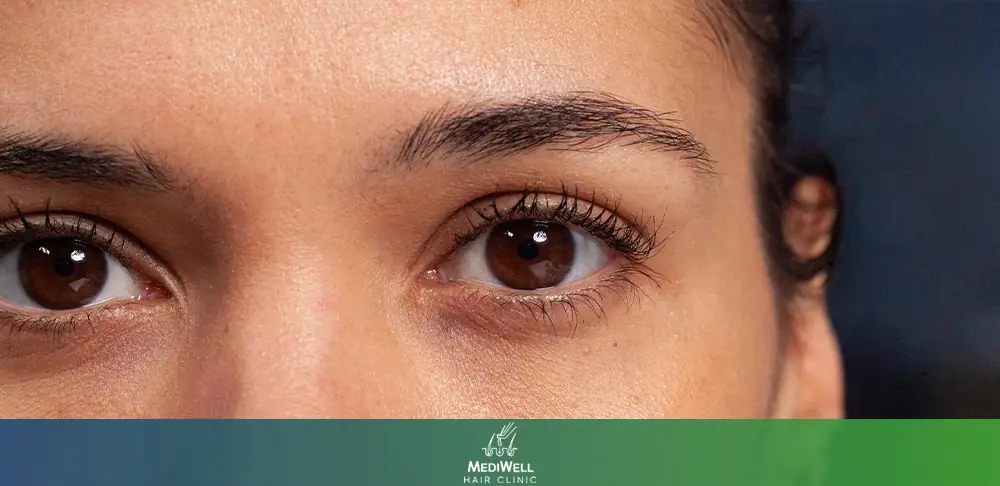
2. Natural Results Depend More on Hair Direction Than Hair Density
One of the biggest factors influencing natural-looking eyebrow transplant results is the angle and direction of each transplanted hair rather than the number of grafts alone. Even dense eyebrows can appear artificial if the follicles are placed incorrectly, while carefully angled grafts create a softer, more realistic appearance.
Expert Insight
“Patients often ask how many grafts they need. While graft numbers are important, the true artistry of eyebrow transplantation lies in recreating the natural direction, curvature and flow of every individual hair. These details are what make restored eyebrows look authentic rather than transplanted.”
— Hair Restoration Specialists, Mediwell Hair Clinic London
Why Hair Direction Matters More Than Density
When people imagine a successful eyebrow transplant, they usually think about achieving fuller eyebrows. In reality, experienced hair restoration specialists know that density alone does not determine a natural result.
Natural eyebrows are made up of hairs growing in multiple directions. Along the inner brow, hairs generally grow upwards before gradually changing direction across the eyebrow. Towards the tail, they become increasingly horizontal. This subtle variation creates the soft, feathered appearance that defines a natural eyebrow.
If transplanted follicles are implanted at the wrong angle, even technically successful grafts may produce eyebrows that look stiff, untidy or obviously artificial.
For this reason, eyebrow transplantation is often considered one of the most technically demanding forms of hair restoration.
Every Hair Has a Purpose
Unlike scalp hair, eyebrow follicles cannot simply be implanted in rows.
Each follicular unit must contribute to the overall eyebrow shape while maintaining facial harmony.
At Mediwell Hair Clinic London, our eyebrow restoration specialists carefully analyse:
- Existing eyebrow shape
- Facial symmetry
- Natural eyebrow arch
- Hair calibre
- Hair curl characteristics
- Individual facial proportions
Rather than copying a standard eyebrow template, every treatment plan is tailored to complement the patient’s unique facial features.
This personalised approach helps produce results that remain natural both at rest and during facial expression.
Clinical Perspective
During an eyebrow transplant consultation, the discussion should focus on more than simply filling sparse areas. Specialists should evaluate eyebrow balance, facial proportions and long-term aesthetic goals before designing the recipient area.
More Grafts Do Not Always Mean Better Results
A common misconception is that transplanting more grafts automatically creates better eyebrows.
In reality, excessive graft density can sometimes have the opposite effect.
Placing follicles too closely together may:
- Reduce natural definition.
- Create an unnaturally solid appearance.
- Make future grooming more difficult.
- Compromise the visual softness that characterises natural eyebrows.
Successful eyebrow restoration is based on precision rather than volume.
The objective is to recreate the appearance of naturally growing eyebrows, not simply to maximise hair density.
Common Misconception
Myth
The more grafts implanted, the better the final result.
Reality
A natural eyebrow depends on correct hair direction, appropriate density, careful spacing and personalised design. Overloading the eyebrow with grafts may reduce rather than improve aesthetic outcomes.
Facial Harmony is More Important Than Following Trends
Eyebrow fashion changes over time, but facial anatomy does not.
A shape that suits one individual may appear unnatural on another.
Modern eyebrow transplantation focuses on creating balance with the patient’s:
- Forehead proportions
- Eye position
- Brow bone anatomy
- Facial symmetry
- Natural facial expressions
Rather than designing fashionable eyebrows, experienced specialists aim to create eyebrows that continue to look appropriate for many years.
This long-term approach is one reason personalised planning remains a key component of successful eyebrow restoration.
What Our Specialists Explain During Consultation
Patients frequently arrive with photographs of celebrities or social media influencers as examples of their preferred eyebrow shape.
During consultations at Mediwell Hair Clinic London, our specialists explain that the most successful eyebrow transplant is rarely an exact copy of someone else’s eyebrows.
Instead, treatment planning focuses on designing eyebrows that complement the individual’s facial structure, existing hair characteristics and long-term aesthetic goals.
This personalised approach often produces more natural and satisfying results than attempting to recreate fashionable eyebrow trends.
Natural eyebrow transplantation is defined by precision rather than graft numbers. Hair direction, implantation angle, eyebrow design and facial harmony play a greater role in achieving realistic, long-lasting results than density alone. Choosing a clinic that prioritises these principles can make the difference between eyebrows that simply contain transplanted hair and eyebrows that appear naturally yours.
pproximately 9–12 months
Longevity: Permanent when healthy follicles successfully establish blood supply
Maintenance: Regular trimming is usually required because transplanted hairs retain many characteristics of the donor area.
Not Everyone is a Suitable Candidate for an Eyebrow Transplant
The best candidates for an eyebrow transplant have stable eyebrow hair loss, sufficient donor hair and realistic expectations about the outcome. A personalised consultation is essential because not every cause of eyebrow thinning is best treated with surgery.
Expert Insight
“One of the biggest misconceptions is that every patient with thin eyebrows should undergo transplantation. In reality, careful candidate selection is one of the most important factors influencing long-term satisfaction and natural-looking results.”
— Hair Restoration Specialists, Mediwell Hair Clinic London
Many people assume that eyebrow transplantation is simply a cosmetic procedure suitable for anyone who wants fuller brows. In clinical practice, the decision is far more individual.
A successful outcome begins with understanding why eyebrow hair has been lost. Patients with stable eyebrow thinning caused by genetics, previous over-plucking, ageing, trauma or scars often achieve predictable, long-lasting improvements. In contrast, individuals experiencing active inflammatory skin conditions or unstable hair loss disorders may require medical treatment before surgery is considered.
This is why experienced clinics spend time assessing more than the eyebrow itself. During consultations at Mediwell Hair Clinic London, our specialists evaluate donor hair quality, facial proportions, eyebrow symmetry, skin condition and the stability of hair loss before recommending treatment. These factors help determine whether transplantation is likely to deliver a natural and lasting result.
Equally important is the patient’s expectation. An eyebrow transplant can enhance density, redefine shape and restore areas of missing hair, but it cannot replicate every characteristic of naturally growing eyebrow hair. Open discussions before surgery help patients understand what is realistically achievable and allow the treatment plan to be tailored to their facial features rather than following a standard eyebrow template.
Clinical Note
A consultation should answer far more than “Can I have an eyebrow transplant?” It should also establish:
- Why eyebrow loss occurred.
- Whether hair loss has stabilised.
- Whether donor hair characteristics are suitable.
- What eyebrow shape best complements the patient’s facial anatomy.
- Whether surgery is the most appropriate solution compared with non-surgical alternatives.
Choosing the right patient is the foundation of a successful eyebrow transplant. When treatment is based on accurate diagnosis, realistic expectations and personalised planning, patients are far more likely to achieve natural, long-lasting results.
3. What Really Determines the Success of an Eyebrow Transplant?
A successful eyebrow transplant depends on much more than the procedure itself. Candidate selection, donor hair quality, eyebrow design, graft placement, aftercare and long-term planning all contribute to achieving natural, lasting results. While surgical technique is important, the final outcome is shaped by the combination of these clinical factors rather than any single element.
Expert Insight
“Patients often ask which technique delivers the best results. In reality, success is determined less by the name of the technique and more by careful planning, precise graft placement and an individualised treatment strategy. Every eyebrow transplant should be designed around the patient’s facial anatomy rather than following a standard template.”
— Hair Restoration Specialists, Mediwell Hair Clinic London
No Single Factor Determines the Final Result
Many people believe that choosing an experienced clinic automatically guarantees an excellent outcome. While surgical expertise is essential, eyebrow transplantation is influenced by several interconnected factors that begin long before the first graft is implanted.
Successful treatment is achieved when every stage of the patient journey is carefully planned—from assessing suitability and selecting the donor area to designing the eyebrow shape and supporting healthy graft healing after surgery.
Understanding these factors helps patients make informed decisions and ask the right questions during their consultation.
What Really Determines the Success of an Eyebrow Transplant?
| Clinical Factor | Why It Matters | Impact on Final Results | Can It Be Optimised? |
|---|---|---|---|
| Patient Selection | Identifies whether surgery is the most appropriate treatment. | ★★★★★ Very High | ✅ Yes |
| Donor Hair Quality | Determines hair texture, calibre and long-term growth characteristics. | ★★★★★ Very High | ⚠️ Partly |
| Eyebrow Design | Creates facial harmony and natural proportions. | ★★★★★ Very High | ✅ Yes |
| Hair Direction & Angle | Mimics natural eyebrow growth and prevents an artificial appearance. | ★★★★★ Very High | ✅ Yes |
| Graft Placement Precision | Protects existing hairs and improves overall density distribution. | ★★★★★ Very High | ✅ Yes |
| Healing & Aftercare | Supports graft survival during the early recovery period. | ★★★★☆ High | ✅ Yes |
| Patient Expectations | Ensures realistic goals and long-term satisfaction. | ★★★★☆ High | ✅ Yes |
| Long-Term Maintenance | Helps maintain eyebrow shape through regular trimming and grooming. | ★★★★☆ High | ✅ Yes |
Why This Matters
No single factor is solely responsible for a successful eyebrow transplant. The most natural and consistent results are achieved when all of these elements work together as part of a personalised treatment plan.
Good Planning Begins Before Surgery
One of the biggest differences between average and outstanding results is the amount of planning completed before the procedure.
Rather than focusing immediately on graft numbers, experienced specialists first evaluate:
- The underlying cause of eyebrow loss.
- Facial symmetry and proportions.
- Existing eyebrow shape.
- Donor hair characteristics.
- Skin quality within the recipient area.
- The patient’s long-term aesthetic goals.
This comprehensive assessment helps create a treatment plan that looks natural immediately after healing and continues to age well over time.
At Mediwell Hair Clinic London, consultation appointments are designed to answer these questions before surgery is recommended, ensuring every patient receives advice tailored to their individual circumstances.
Decision Point
Before choosing a clinic, ask how the eyebrow design will be planned—not just how many grafts will be transplanted. The planning process often has a greater influence on the final appearance than graft numbers alone.
Why Donor Hair Quality Should Never Be Overlooked
Although eyebrows appear delicate, they are created using hair follicles taken from another part of the body, most commonly the area behind the ears.
Not all donor hair is identical.
Hair thickness, texture, colour, curl and growth behaviour all influence how naturally the transplanted hairs blend with the existing eyebrows.
Selecting the most suitable donor hairs is therefore an essential part of treatment planning.
The objective is not simply to achieve growth, but to create eyebrows that match the patient’s natural facial features as closely as possible.
Clinical Note
The finest donor hair is not always the best choice. Specialists evaluate multiple characteristics—including texture, calibre and growth pattern—to select follicles that will integrate naturally with the existing eyebrow hair.
Successful Results Continue Beyond Surgery
The procedure itself represents only one stage of the treatment journey.
Patients also play an important role in supporting their final outcome by following aftercare instructions during the healing period.
Protecting newly transplanted follicles, attending follow-up appointments and understanding the normal growth cycle all contribute to long-term success.
This collaborative approach helps maximise graft survival while allowing the transplanted hairs to establish healthy blood supply during the first weeks after surgery.
Patient Question
“What is the single most important factor for a successful eyebrow transplant?”
There is no single deciding factor.
Instead, successful eyebrow transplantation depends on the combination of accurate diagnosis, careful planning, experienced surgical technique, personalised eyebrow design, healthy donor hair and good post-operative care. When these elements work together, patients are more likely to achieve natural-looking, long-lasting results.
The success of an eyebrow transplant is built on a series of carefully planned decisions rather than one individual technique or graft number. Patients who choose a clinic that prioritises personalised assessment, natural eyebrow design and long-term planning are more likely to achieve results that remain balanced, realistic and aesthetically pleasing for years to come.
4. Your New Eyebrows Will Continue Growing Like Scalp Hair
One of the most important things to understand before an eyebrow transplant is that the transplanted hairs usually retain the growth characteristics of the donor area. This means your new eyebrows will continue to grow and will require regular trimming and grooming to maintain their desired shape.
Expert Insight
“Many patients are surprised to learn that transplanted eyebrow hairs behave differently from natural eyebrow hairs. This is entirely expected because the follicles retain many of the biological characteristics of the donor area. Understanding this before surgery helps patients develop realistic expectations and long-term satisfaction.”
— Hair Restoration Specialists, Mediwell Hair Clinic London
Why Do Transplanted Eyebrow Hairs Continue to Grow?
Unlike naturally occurring eyebrow hairs, transplanted follicles are usually harvested from the scalp, where hairs are genetically programmed to grow much longer.
Although these follicles adapt to their new location, they generally continue to follow the growth cycle of the donor area rather than that of native eyebrow hair.
As a result, patients should expect their new eyebrows to require occasional maintenance throughout the year.
Rather than being considered a disadvantage, this ongoing growth is actually a positive sign that the transplanted follicles have successfully established themselves and remain healthy.
Regular Trimming Becomes Part of Long-Term Care
One of the most common questions asked during consultations is whether transplanted eyebrows need ongoing maintenance.
The simple answer is yes.
Most patients find that trimming every few weeks is enough to maintain a neat and natural appearance, although the exact frequency varies depending on individual hair growth.
Regular maintenance may include:
- Trimming longer hairs.
- Light grooming to maintain shape.
- Brushing the hairs into their natural direction.
- Following any long-term care advice provided by the clinical team.
These small routines soon become part of normal personal grooming and help preserve the appearance achieved after surgery.
Patient Question
Will my transplanted eyebrows keep growing forever?
In most cases, yes. Because the transplanted follicles originate from the scalp, they usually continue producing hair throughout the patient’s lifetime. This is why occasional trimming remains an expected part of long-term eyebrow maintenance.
First Two Weeks
The transplanted follicles settle into the recipient area while tiny crusts gradually disappear.
Two to Six Weeks
Many of the newly transplanted hairs naturally shed. This temporary shedding—often called shock shedding—is a normal part of the hair growth cycle and does not mean the procedure has failed.
Three to Four Months
Early new hair growth usually begins. The first hairs are often finer and less dense than the final result.
Six to Nine Months
Density gradually improves as more follicles enter their active growth phase. Eyebrow shape becomes increasingly defined.
Nine to Twelve Months
Most patients appreciate their final aesthetic outcome during this period. The transplanted eyebrows typically appear fuller, softer and more natural as the hairs mature.
Clinical Perspective
Patients should judge the success of an eyebrow transplant over months rather than weeks. Hair follicles require time to establish a healthy blood supply and progress naturally through the growth cycle before the final appearance becomes visible.
Temporary Shedding is a Normal Stage of Healing
One of the biggest causes of unnecessary anxiety is the temporary loss of transplanted hairs during the first few weeks.
This phenomenon is entirely expected.
While the visible hair shafts may fall out, the follicles themselves usually remain healthy beneath the skin and later begin producing new hairs.
Understanding this process before surgery helps patients avoid mistaking normal healing for treatment failure.
Myth vs Reality
Myth
If the transplanted hairs fall out after surgery, the eyebrow transplant has failed.
Reality
Temporary shedding is a normal stage of the hair growth cycle. In most cases, the follicles remain healthy and begin producing new hairs several months later.
What Our Specialists Explain During Consultation
During consultations at Mediwell Hair Clinic London, patients are encouraged to think beyond the first few weeks after surgery.
Our hair restoration specialists explain the complete growth timeline, expected maintenance requirements and the importance of allowing sufficient time for the final results to develop.
Setting realistic expectations before treatment often leads to greater confidence throughout the recovery process and higher satisfaction once the eyebrows have fully matured.
A successful eyebrow transplant is not judged immediately after surgery. New hairs require time to grow, mature and blend naturally with the existing eyebrows. Because transplanted follicles usually retain the characteristics of the donor area, regular trimming becomes part of long-term care, while patience throughout the first year is essential for appreciating the final result.
5. Recovery is Usually Easier Than Most Patients Expect
Most patients experience only mild discomfort following an eyebrow transplant and can return to many normal daily activities within a few days. Temporary redness, slight swelling and small crusts are expected during the first week, while complete healing of the transplanted area gradually continues over the following weeks.
Expert Insight
“Recovery is often much easier than patients anticipate. The most important part of the healing period is protecting the newly implanted follicles while allowing the skin to recover naturally. Small daily precautions during the first week can make a significant difference to the final outcome.”
— Hair Restoration Specialists, Mediwell Hair Clinic London
What Should You Expect During Recovery?
One of the most common concerns before surgery is whether recovery will be painful or disruptive.
In reality, an eyebrow transplant is generally considered a minimally invasive procedure performed under local anaesthetic. Most patients describe the recovery period as manageable, with only minor discomfort during the first few days.
It is completely normal to experience:
- Mild redness around the recipient area.
- Small protective crusts surrounding each graft.
- Temporary swelling, particularly around the forehead or upper eyelids.
- Slight tenderness when touching the treated area.
These symptoms usually improve steadily during the first week.
The First Seven Days Are the Most Important
Although recovery is relatively straightforward, the transplanted follicles are particularly delicate during the early healing phase.
Patients are usually advised to:
- Avoid rubbing or scratching the eyebrows.
- Follow the recommended cleansing routine.
- Sleep with the head slightly elevated if advised.
- Avoid strenuous exercise during the initial recovery period.
- Protect the treated area from unnecessary friction or trauma.
These simple measures help support healthy graft survival while reducing unnecessary irritation.
Clinical Note
Every patient’s recovery progresses at a slightly different pace. Healing instructions should always be personalised according to the treatment performed and the advice provided by the clinical team.
Returning to Everyday Life
Many patients are pleasantly surprised by how quickly they are able to resume normal routines.
Office-based work is often possible within a few days, although some individuals may prefer to wait until visible redness or crusting has settled.
More demanding physical activities should generally be postponed until the transplanted follicles have become securely established.
Rather than rushing recovery, allowing the eyebrows to heal naturally helps optimise the long-term result.
Patient Question
Will people immediately notice I’ve had an eyebrow transplant?
During the first week, temporary redness and small crusts may be visible. As healing progresses, these signs gradually disappear and the transplanted eyebrows begin to look increasingly natural.
Recovery following an eyebrow transplant is usually shorter and more comfortable than many patients expect. Following the aftercare guidance provided by your clinic and protecting the newly implanted follicles during the first week are among the most important steps in supporting a successful outcome.
6. Long-Term Maintenance is Part of a Successful Eyebrow Transplant
An eyebrow transplant delivers permanent hair growth, but maintaining an attractive eyebrow shape requires ongoing care. Regular trimming, occasional grooming and realistic long-term expectations help preserve natural-looking results for many years.
Expert Insight
“A successful eyebrow transplant should continue looking natural long after the healing process has finished. Long-term maintenance is not a sign that something is wrong—it simply reflects the fact that transplanted follicles continue behaving much like the donor hair from which they originated.”
— Hair Restoration Specialists, Mediwell Hair Clinic London
Permanent Results Still Require Regular Care
One of the biggest advantages of an eyebrow transplant is that the transplanted follicles are intended to provide a long-lasting solution.
However, permanence should not be confused with being completely maintenance-free.
Because transplanted hairs generally retain the biological characteristics of the donor area, occasional grooming remains an expected part of everyday care.
For most patients, this simply becomes another routine personal grooming habit.
Small Maintenance Habits Make a Big Difference
Maintaining natural-looking eyebrows usually involves only simple steps, including:
- Trimming hairs when they become too long.
- Brushing the eyebrows into their preferred direction.
- Keeping the eyebrow shape neat and symmetrical.
- Monitoring any changes during routine follow-up appointments if recommended.
These habits require minimal effort but contribute significantly to preserving a well-defined and natural appearance.
Common Mistakes to Avoid
- Expecting immediate final results.
- Comparing your progress with someone else’s recovery timeline.
- Ignoring aftercare advice during the first weeks.
- Over-trimming newly established eyebrow hairs.
- Choosing eyebrow shape based solely on temporary beauty trends rather than facial harmony.
Long-Term Success Begins With Realistic Expectations
Patients who understand both the benefits and responsibilities of eyebrow transplantation are often the most satisfied with their results.
At Mediwell Hair Clinic London, consultations focus not only on the procedure itself but also on helping patients understand how their eyebrows will continue to evolve after surgery.
Discussing maintenance before treatment allows patients to make informed decisions and reduces unnecessary concerns during recovery.
Consultation Insight
During consultations, our specialists encourage patients to think beyond the procedure itself. Understanding long-term grooming, hair growth behaviour and realistic expectations is an important part of achieving lasting satisfaction.
An eyebrow transplant is designed to deliver long-lasting improvement, but maintaining natural results is an ongoing partnership between the patient and the clinical team. Simple grooming habits, realistic expectations and personalised follow-up advice all contribute to eyebrows that continue to look balanced and natural for years to come.

7. Choosing the Right Clinic Matters More Than Most Patients Realise
The success of an eyebrow transplant depends not only on the procedure itself but also on the experience of the clinical team, the quality of the consultation and the level of personalised treatment planning. Choosing a clinic based solely on price or graft numbers may compromise the natural appearance and long-term satisfaction of your results.
Expert Insight
“An eyebrow transplant should never be viewed as a standard cosmetic procedure. Every patient has different facial proportions, eyebrow characteristics and expectations. The consultation process is where the foundation for a natural-looking result is created.”
— Hair Restoration Specialists, Mediwell Hair Clinic London
A Consultation Should Be More Than a Price Discussion
Many patients begin their search by comparing prices. While cost is naturally an important consideration, it should never be the only factor influencing your decision. A high-quality consultation should answer questions that extend well beyond the procedure itself.
For example:
- Why have your eyebrows become thinner?
- Is your hair loss stable?
- Are you a suitable candidate?
- How should your new eyebrows be designed?
- What level of density is realistic?
- What long-term maintenance will be required?
If these questions are not discussed, important aspects of treatment planning may be overlooked.
Personalised Planning Creates Natural Results
No two faces are identical. For this reason, successful eyebrow transplantation should never rely on a standard eyebrow template.
At Mediwell Hair Clinic London, consultations focus on creating an individual treatment plan based on each patient’s:
- Facial proportions
- Brow bone anatomy
- Existing eyebrow shape
- Donor hair characteristics
- Long-term aesthetic goals
This personalised approach helps ensure that restored eyebrows complement the patient’s facial features rather than simply increasing eyebrow density.
Clinical Perspective
Natural eyebrows are designed—not copied. The objective is to restore facial harmony while respecting each patient’s unique anatomy, expressions and long-term appearance.
Questions Worth Asking Before Choosing a Clinic
Patients often spend considerable time researching eyebrow transplant techniques but forget to evaluate the consultation process itself.
Consider asking:
- Who designs my new eyebrows?
- How is facial symmetry assessed?
- How are donor hairs selected?
- How will natural hair direction be recreated?
- What results should I realistically expect after one year?
- What support is available during recovery?
The quality of these answers often reveals more about a clinic than any marketing claim.
Decision Checklist Before Booking Surgery
Before committing to treatment, consider whether the clinic:
– Performs an individual suitability assessment.
– Creates a personalised eyebrow design rather than using standard templates.
– Explains realistic expectations clearly.
– Discusses long-term maintenance requirements.
– Provides detailed aftercare guidance.
– Prioritises natural hair direction and facial harmony.
– Encourages informed decision-making without unnecessary pressure.
Patients who can confidently answer “yes” to these points are generally better prepared to make an informed treatment decision.
Consultation Insight
During consultations at Mediwell Hair Clinic London, patients are encouraged to ask questions and fully understand every stage of the treatment journey. A well-informed patient is more likely to feel confident before surgery and satisfied with the final outcome.
Key Clinical Takeaways
Before deciding on an eyebrow transplant, remember these seven essential points:
- Not everyone is an ideal candidate.
Treatment should begin with an accurate assessment rather than an automatic recommendation for surgery.
- Natural design is more important than maximum density.
Hair direction, implantation angle and facial harmony determine whether restored eyebrows appear authentic.
- Multiple clinical factors influence success.
Excellent outcomes result from careful planning, precise execution and realistic expectations—not simply the technique used.
- Transplanted hairs continue growing.
Regular trimming is a normal part of maintaining natural-looking eyebrows.
- Recovery requires patience.
Healing follows a predictable biological timeline, with final results usually developing over several months.
- Long-term maintenance matters.
Simple grooming habits help preserve eyebrow shape and overall appearance.
- Choosing the right clinic is one of the most important decisions.
Experience, personalised planning and ongoing patient support contribute significantly to long-term satisfaction.
An eyebrow transplant can provide a natural and long-lasting solution for patients experiencing eyebrow thinning due to genetics, over-plucking, ageing or scarring. However, successful treatment depends on far more than the surgical procedure alone.
Careful candidate selection, personalised eyebrow design, appropriate donor hair selection, precise graft placement and realistic expectations all contribute to achieving results that complement the patient’s facial features.
At Mediwell Hair Clinic London, our approach focuses on individual assessment rather than standard treatment protocols. Every consultation aims to help patients understand not only how the procedure is performed but also whether it is the most appropriate solution for their long-term goals.
When planned carefully and performed by an experienced team, an eyebrow transplant can restore confidence while maintaining a natural appearance that continues to look balanced for years to come.
Choosing to undergo an eyebrow transplant is a personal decision that deserves careful consideration and accurate information. While the procedure itself is relatively straightforward, achieving a successful outcome depends on thoughtful planning before surgery and realistic expectations afterwards.
Understanding the seven key principles discussed in this guide allows patients to approach treatment with greater confidence and make informed decisions based on clinical evidence rather than common misconceptions.
Whether you are at the beginning of your research or preparing for a consultation, taking the time to understand these factors can help you achieve results that not only restore eyebrow density but also enhance facial harmony in a natural and lasting way.
Frequently Asked Questions
Is an eyebrow transplant permanent?
Yes. An eyebrow transplant is generally considered a permanent solution because the transplanted follicles continue producing hair after they have successfully established themselves in the recipient area. However, the final appearance also depends on appropriate aftercare, long-term grooming and the natural characteristics of the donor hair.
How long does an eyebrow transplant take?
Most eyebrow transplant procedures are completed within two to four hours, although the exact duration depends on the number of grafts required and the complexity of the eyebrow design.
When will I see the final results?
Most patients notice early growth after three to four months, with significant improvement between six and nine months. Final results are usually visible after approximately 9 to 12 months.
Will the transplanted eyebrow hairs continue growing?
Yes. Because the follicles are usually taken from the scalp, they typically retain many of their original growth characteristics. Regular trimming is therefore a normal part of long-term maintenance.
Is an eyebrow transplant painful?
The procedure is performed under local anaesthetic, meaning patients generally experience minimal discomfort during treatment. Mild tenderness afterwards is common and usually temporary.
Who is a good candidate for an eyebrow transplant?
People with stable eyebrow hair loss caused by genetics, over-plucking, ageing or scarring are often suitable candidates. A personalised consultation is necessary to determine whether surgery is the most appropriate option.
Can eyebrow transplants look natural?
Yes. Natural results depend on careful eyebrow design, accurate hair direction, appropriate graft placement and facial harmony rather than graft numbers alone.
How many grafts are usually needed?
The number of grafts varies from patient to patient. Treatment is planned according to eyebrow shape, existing hair, facial proportions and the desired level of density rather than a fixed graft target.
Will the transplanted hairs fall out?
Temporary shedding during the first few weeks is normal. This is part of the natural hair growth cycle and does not usually indicate treatment failure.
Can I return to work after an eyebrow transplant?
Many patients return to office-based work within a few days, although some prefer to wait until redness and crusting have improved.
Is an eyebrow transplant better than microblading?
These treatments serve different purposes. An eyebrow transplant restores living hair, whereas microblading creates the appearance of hair using cosmetic pigmentation. The most suitable option depends on individual goals and clinical assessment.
Will I need another eyebrow transplant in the future?
Most patients achieve long-lasting results after a single procedure. However, individual circumstances, future hair loss and aesthetic goals may influence whether additional treatment is considered.
How should I prepare for an eyebrow transplant consultation?
Patients should be prepared to discuss their medical history, previous eyebrow treatments, expectations and the reason for eyebrow hair loss. Bringing reference photographs may also help explain personal preferences, although treatment should always be tailored to individual facial anatomy.
What should I look for when choosing a clinic?
Look for a clinic that provides a thorough consultation, explains realistic expectations, prioritises natural eyebrow design and offers comprehensive aftercare rather than focusing solely on graft numbers or pricing.
Where can I learn more about the procedure?
If you would like a detailed explanation of how the procedure is performed, who is suitable for treatment and what happens during surgery, you can also read our comprehensive Eyebrow Transplant guide on the Mediwell Hair Clinic website.
This article has been prepared using recognised medical guidance and internationally accepted best practices relating to hair restoration procedures.
Table of Contents
Book a Consultation
Simply fill in your details and we’ll get in touch with you shortly.

Location Of Our Hair Transplant Clinic
Contact our hair transplant clinic, located in the heart of London, now.
- 02039 510 203
- 07947 322 737
- 1C Lansdowne Rd, N17 0LL, London