
Causes of Hair Loss in the Crown Area
The most common causes of hair loss in the crown area include genetic predisposition (androgenetic alopecia), DHT sensitivity, hormonal imbalances, stress, nutritional deficiencies, thyroid disorders and ageing. Early diagnosis is essential because most crown hair loss conditions can be slowed or treated effectively.
Introduction
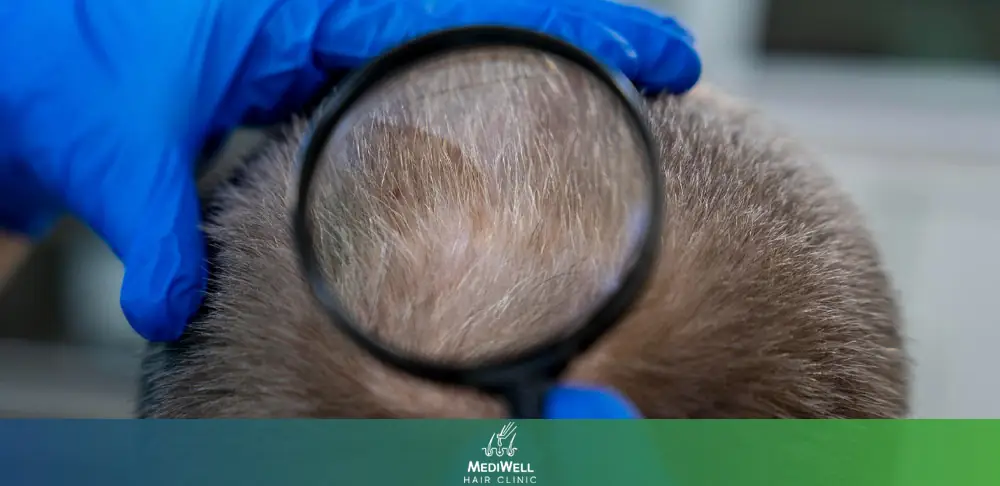
Causes of Hair Loss in the Crown Area is one of the most searched topics among individuals experiencing thinning at the top of the scalp. The crown area (vertex) is highly sensitive to hormonal and genetic influences, making it one of the earliest regions affected by progressive hair loss.
At Mediwell Hair Clinic, we regularly assess patients with crown thinning, reduced density and visible scalp exposure. While genetics is the primary cause, several additional factors may contribute.
What is the Crown Area?
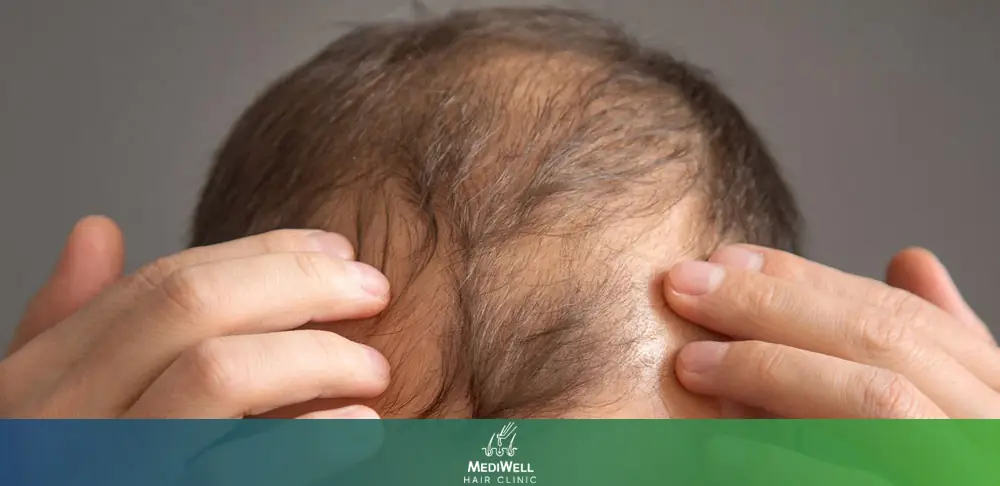
The crown area is located on the upper rear scalp where hair grows in a circular whorl pattern. This unique structure makes thinning more visible even with small reductions in density.
Because it is difficult to observe daily, crown hair loss often progresses unnoticed for long periods.
Why is the Crown Area More Susceptible to Hair Loss?
The crown region contains follicles that are highly sensitive to dihydrotestosterone (DHT). In genetically predisposed individuals, DHT shortens the hair growth cycle and causes follicular miniaturisation.
Follicular Miniaturisation Explained
Follicular miniaturisation refers to the gradual shrinking of hair follicles over time. Each new hair becomes thinner until growth eventually stops completely.
Androgenetic Alopecia: The Main Cause of Crown Hair Loss
Androgenetic alopecia is the most common cause of hair loss in the crown area. It is a genetic condition that affects both men and women.
In men, it often starts at the crown and temples. In women, it typically appears as diffuse thinning across the top of the scalp.
Key Features
- Gradual progression
- Reduced hair density
- Visible scalp
- Family history
- Thinner hair strands
How DHT Causes Crown Hair Loss
DHT (dihydrotestosterone) binds to receptors in sensitive follicles, shortening the growth phase of hair. Over time, this leads to thinner and weaker hair until follicles stop producing visible hair.
Even normal hormone levels can cause hair loss if genetic sensitivity exists.
Hormonal Imbalances and Crown Hair Loss
Hormonal changes significantly affect hair growth cycles.
Thyroid Disorders
Both hypothyroidism and hyperthyroidism can cause diffuse shedding and crown thinning.
Menopause
Reduced oestrogen levels can lead to decreased hair density in women.
PCOS
Increased androgen activity may contribute to female pattern hair loss.
Can Stress Cause Hair Loss in the Crown Area?
Yes. Chronic stress can trigger telogen effluvium, a condition where hair follicles enter the resting phase prematurely.
Symptoms of Stress-Related Hair Loss
- Increased shedding
- Hair fall during washing
- Reduced volume
- Crown thinning
Nutritional Deficiencies Linked to Crown Hair Loss
Hair follicles require vitamins, minerals and proteins for healthy growth.
Iron Deficiency
One of the most common causes of hair shedding.
Vitamin D Deficiency
May contribute to follicle weakening.
Zinc Deficiency
Important for tissue repair and growth.
Vitamin B12 & Folate
Essential for healthy cell production.
Protein Deficiency
Hair is made of keratin, a structural protein.
Autoimmune Conditions Affecting the Crown Area
Alopecia Areata
An autoimmune condition that causes patchy hair loss.
Lupus
Can affect scalp health and hair density. These conditions require specialist diagnosis.
Ageing and Crown Hair Loss
Ageing naturally slows down hair growth. Follicles become less active, and hair strands become finer.
- Slower growth rate
- Reduced density
- Weaker follicles
Early Signs of Crown Hair Loss
- Visible scalp under light
- Reduced crown volume
- Increased shedding
- Thinner strands
- Difficulty styling

How is Crown Hair Loss Diagnosed?
Accurate diagnosis ensures correct treatment planning.
Clinical Examination
Scalp and hair pattern evaluation.
Trichoscopy
Magnified imaging to detect follicle changes.
Blood Tests
Identify nutritional or hormonal issues.
Treatment Options for Crown Hair Loss
Minoxidil
Supports hair growth and improves density.
Finasteride
Reduces DHT levels and slows progression.
Dutasteride
Stronger DHT suppression under medical supervision.
PRP Therapy
Uses growth factors to stimulate follicles.
Exosome Therapy
Advanced regenerative treatment option.
Microneedling
Improves scalp stimulation and absorption.
Is Hair Transplant Effective for Crown Hair Loss?
Hair transplantation is effective for advanced crown hair loss but requires careful planning due to the natural whorl pattern.
Crown Design Importance
Correct graft direction, angle and density are essential for natural results.
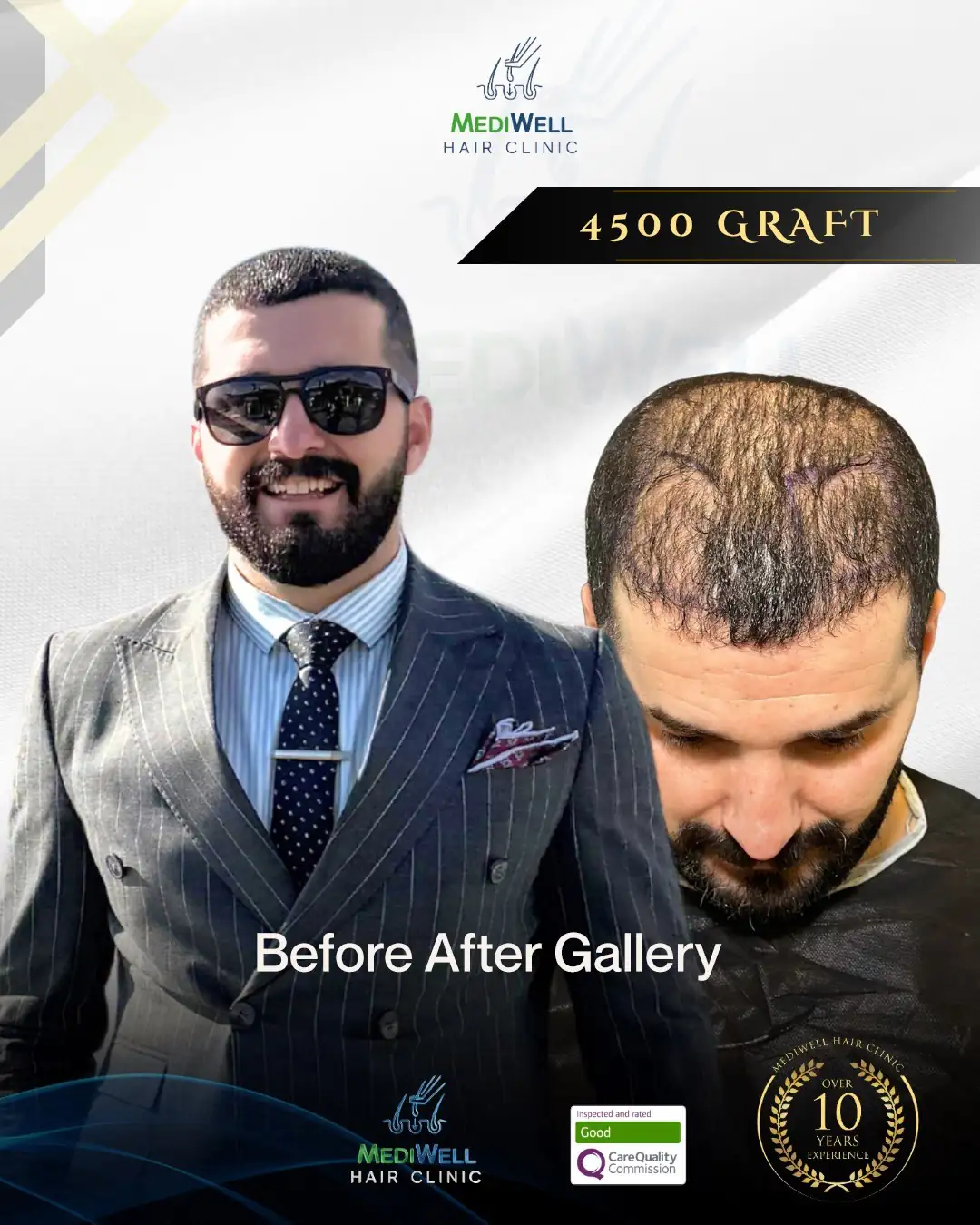
At Mediwell Hair Clinic, crown transplants are individually designed for natural appearance and long-term density.
Can Crown Hair Loss Be Prevented?
Not all cases are preventable, but progression can often be slowed.
- Early treatment
- Healthy nutrition
- Stress control
- Medical support
- Regular monitoring
When Should You Seek Professional Advice?
Seek help if you notice:
- Progressive thinning
- Visible scalp
- Excess shedding
- Family history
- Texture changes
Conclusion
Hair loss in the crown area is caused by a combination of genetic, hormonal, nutritional and environmental factors. Early diagnosis and targeted treatment can significantly slow progression and improve hair density.
Frequently Asked Questions
What causes crown hair loss most commonly?
Genetic androgenetic alopecia.
Why does crown hair loss start first?
Because follicles are highly sensitive to DHT.
Can stress cause crown thinning?
Yes, via telogen effluvium.
Is vitamin deficiency linked to hair loss?
Yes, especially iron and vitamin D.
Can women experience crown hair loss?
Yes, very commonly.
Is crown hair loss reversible?
Depends on the cause and stage.
Does Minoxidil work?
Yes for many patients.
Does Finasteride stop hair loss?
It slows DHT-related loss.
Is hair transplant permanent?
Generally yes.
How is crown hair loss diagnosed?
Through trichoscopy and medical tests.
What age does crown hair loss start?
Often in the 20s or 30s.
Can thyroid issues cause hair loss?
Yes.
Does PRP help?
It may improve hair quality.
Is crown hair loss genetic?
Mostly yes, but not always.
When should I see a doctor?
At the first signs of thinning.
Table of Contents
Book a Consultation
Simply fill in your details and we’ll get in touch with you shortly.

Location Of Our Hair Transplant Clinic
Contact our hair transplant clinic, located in the heart of London, now.
- 02039 510 203
- 07947 322 737
- 1C Lansdowne Rd, N17 0LL, London