
Hair Surgery for Women in UK 2026 Guide
Hair surgery for women is a permanent hair restoration procedure designed to restore hair density in carefully selected female patients experiencing hair loss or thinning. Modern techniques such as Sapphire FUE and DHI can produce natural-looking results when there is a stable pattern of hair loss, sufficient donor hair and a personalised surgical plan. However, not every type of female hair loss is suitable for surgery, making an accurate diagnosis and comprehensive consultation essential before treatment. This guide explains who is suitable for hair surgery for women, how the procedure works, what results you can realistically expect, and the key factors to consider before making a treatment decision.
Hair surgery for women is a modern medical solution designed to restore hair density in female patients experiencing progressive thinning or patterned hair loss. The procedure focuses on redistributing healthy follicular units from donor areas to thinning regions, ensuring long-term biological growth and natural cosmetic blending. At Mediwell Hair Clinic, hair surgery for women is planned through advanced diagnostic imaging, density mapping, and graft-by-graft strategic design. This ensures each treatment reflects individual hair characteristics, facial proportions, and long-term stability expectations. Hair surgery for women in the UK has become increasingly common due to rising awareness of female hair loss conditions and improved surgical precision technologies. The procedure is not artificial hair replacement but a relocation of genetically resistant follicles. These follicles continue to grow naturally for life in most cases. The approach prioritises softness in the hairline and avoids overly dense or unnatural results. Patients often seek this treatment after medical therapies fail to deliver visible improvement. Recovery is gradual and follows predictable biological cycles, making results both stable and natural in appearance over time.
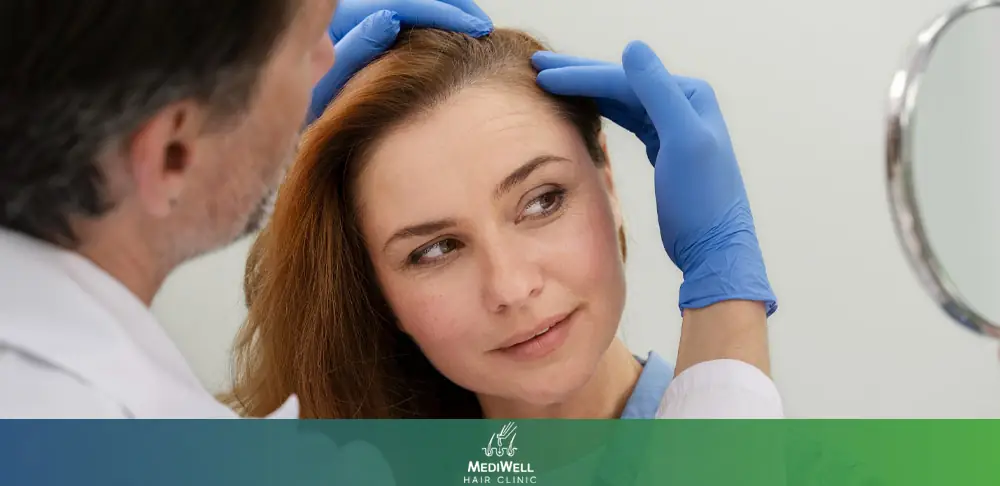
Understanding Hair Surgery for Women
Hair surgery for women refers to follicular unit transplantation performed specifically for female hair loss patterns. Unlike male baldness, female hair loss is often diffuse and spread across the scalp. This requires careful planning rather than aggressive restoration zones. The goal is to improve density while preserving existing hair integrity. Each follicle is carefully selected from donor regions that are genetically resistant to thinning. These are typically located at the back and sides of the scalp. The surgical approach ensures minimal disruption to surrounding hair. It also prioritises long-term balance between transplanted and native hair. Hair surgery for women is not a cosmetic shortcut. It is a structured medical intervention. Each case is evaluated individually before planning begins. This ensures realistic expectations and sustainable outcomes.
How Hair Transplant for Women Works
Hair transplant for women is performed using advanced FUE or DHI techniques. These methods allow precise extraction of individual follicular units without linear scarring. Each graft contains natural hair groupings that determine final density outcomes. After extraction, grafts are preserved in controlled conditions to maintain viability. This step is critical for ensuring high survival rates after implantation. The surgeon then places each graft into thinning areas with accurate angle and direction control. This ensures natural hair flow and realistic density distribution. Female cases require more artistic placement compared to male procedures. This is because women rarely have complete bald areas. Instead, they need density reinforcement across broader zones. The technique ensures seamless blending between existing and transplanted hair.
Hair Transplant Surgery Women Procedure Steps
Hair transplant surgery women follows a structured clinical workflow designed for precision and safety. Each stage is carefully managed to optimise graft survival and aesthetic outcome.
Consultation and Diagnosis
The process begins with a detailed scalp analysis using magnification and density mapping tools. Hair loss pattern and progression are assessed carefully. Donor capacity is evaluated to determine safe graft limits. This ensures long-term donor preservation and avoids overharvesting. A personalised surgical plan is created based on these findings.

Donor Area Extraction
Follicular units are extracted using micro-punch devices under local anaesthesia. Only strong and viable grafts are selected. This improves survival rates after implantation. The extraction pattern is designed to maintain donor area density. This prevents visible thinning after healing.
Graft Preparation and Implantation
Extracted grafts are sorted and prepared under sterile conditions. Each graft is examined before placement. They are implanted following natural hair direction and depth control. This ensures realistic density and natural appearance. Precision during this stage is essential for final outcome quality.
Hair Grafting for Women Explained
Hair grafting for women involves transferring follicular units from donor areas to thinning scalp regions. Each graft contains one to four hairs depending on natural grouping. Required graft numbers depend on severity of hair loss. Mild cases may require 1000–1500 grafts. Moderate thinning may require 1500–2500 grafts. Advanced cases may exceed 3000 grafts. Graft planning is essential for maintaining donor safety. Overharvesting can compromise long-term scalp balance. Therefore, careful calculation is performed before surgery. The success of grafting depends on survival rate and placement accuracy. Modern techniques significantly improve natural integration.
Ladies Hair Transplant Expectations
Ladies hair transplant procedures focus on restoring density without altering natural femininity. The aim is enhancement rather than reconstruction. Hairlines are preserved rather than redesigned aggressively. Results appear gradually over several months. Initial shedding may occur within weeks after surgery. This is a normal biological response. New growth typically begins after three to four months. Final results are visible after twelve months. Density improves progressively during this period. The final outcome blends naturally with existing hair.

Hair Implants for Women Permanence
Hair implants for women are considered a long-term solution. Transplanted follicles retain genetic resistance to hair loss. This allows permanent growth in most cases. However, native hair may continue thinning over time. This can create uneven density if untreated. Therefore, long-term monitoring is recommended. Hair implants are not artificial fibres but natural follicle relocation. This ensures biological compatibility and stable integration. Maintenance treatments may be required depending on progression. Results depend on donor quality and surgical precision.
Hair Surgery for Women Cost UK
Hair surgery for women cost in the UK varies depending on graft number and complexity. Pricing reflects surgical time, technique, and clinical expertise.
Cost Breakdown
1000–1500 grafts: £3,000–£5,000
1500–2500 grafts: £5,000–£8,500
3000+ grafts: £10,000+
Higher graft counts require longer procedures and advanced planning.
Surgeon experience significantly affects pricing. Technique choice such as FUE or DHI also influences cost. Post-operative care packages may be included. Graft quantity remains the primary cost driver. Complex cases require more detailed planning and precision.
UK vs Turkey Hair Surgery for Women
Hair surgery for women is available in both the UK and Turkey. UK clinics offer strict regulatory standards and higher operational costs. Turkey provides more affordable treatment options. Both regions use modern transplantation techniques. The difference lies mainly in pricing structure. Clinical outcomes depend on surgeon expertise rather than geography. Patients often choose based on budget and travel preferences. Both countries can deliver high-quality results when performed correctly.
Recovery begins immediately after the procedure. Mild redness and sensitivity may appear initially. Healing usually completes within seven to ten days. Small scabs fall naturally during this phase. Temporary shedding occurs within weeks. This is part of normal growth cycles. New hair begins growing after three to four months. Full results appear after twelve months. Proper aftercare improves healing quality and graft survival rates.
Hair surgery for women is a medical procedure that restores hair density by transplanting healthy follicles from donor areas to thinning regions. It is commonly used for female pattern hair loss. Results develop gradually and appear natural over time.
If you would like to learn more about restoring eyebrow density and shape, read our comprehensive guide to eyebrow transplant procedures, including candidacy, treatment methods, recovery, and expected results.
According to the NHS, hair loss is a common condition that can affect both men and women and may be caused by genetic, hormonal, or medical factors.
Frequently Asked Questions
What is hair surgery for women?
A transplant procedure restoring female hair density.
Is it permanent?
Yes, transplanted hair is usually permanent.
Does it hurt?
No, local anaesthesia prevents pain.
How long is recovery?
Around seven to ten days.
When does growth start?
After three to four months.
How many grafts needed?
Between 1000 and 3000 typically.
Is it safe?
Yes, when medically performed.
What is a graft?
It slows DHT-related loss.
Is hair transplant permanent?
Generally yes.
How is crown hair loss diagnosed?
A follicular hair unit.
Are results natural?
Yes, with modern techniques.
Can hair still fall?
Native hair may thin over time.
Is UK expensive?
Yes compared to Turkey.
How long results last?
Usually long term.
What is shock loss?
Temporary shedding phase.
Who is suitable?
Patients with donor hair availability.
When final result?
Around twelve months.
Table of Contents
Book a Consultation
Simply fill in your details and we’ll get in touch with you shortly.

Location Of Our Hair Transplant Clinic
Contact our hair transplant clinic, located in the heart of London, now.
- 02039 510 203
- 07947 322 737
- 1C Lansdowne Rd, N17 0LL, London