
How Much Does a Hair Transplant Cost in the UK? UK Prices 2026
A hair transplant in the UK can cost anywhere from around £1,000 to £30,000, according to the NHS, but this exceptionally wide range does not mean most patients will pay either extreme. In 2026, many UK hair transplant quotations fall within roughly £3,000–£15,000, while standard procedures are commonly quoted in the region of £4,000–£7,000. The final price depends primarily on how many grafts you need, the technique used, the complexity of your hair loss, the surgeon’s involvement, the clinic’s location and what is included in your treatment and aftercare.
The important point is that there is no single standard price for a hair transplant.
Two patients can receive very different quotations even when they are considering the same procedure. One person may need a relatively small number of grafts to rebuild a receding hairline, while another may require substantially more grafts to restore the hairline, mid-scalp and crown.
This is why searching for a single “average hair transplant cost” can be misleading. A useful price guide needs to explain what you are actually paying for, how graft requirements affect the quotation and why one clinic may charge considerably more than another.
For patients comparing clinics in the UK, the headline figure should therefore be only the starting point.
The more important questions are:
How many grafts do I actually need?
Who will perform the procedure?
What does the quoted price include?
What level of medical care and aftercare is provided?

For a quick 2026 overview, UK hair transplant prices can broadly be considered as follows:
| Hair Transplant Size | Approximate UK Price Range* | Typical Situation |
|---|---|---|
| Smaller procedure | £3,000–£4,500+ | Early recession or limited hairline work |
| Medium procedure | £4,000–£7,000+ | Hairline and/or mid-scalp restoration |
| Larger procedure | £6,000–£10,000+ | More extensive hair loss |
| Complex or extensive treatment | £10,000+ | Larger areas, advanced loss or staged treatment |
*These are planning ranges rather than fixed prices. Actual quotations vary between clinics and depend on graft requirements, technique, surgeon involvement, complexity, location and what is included.
The NHS gives a considerably wider UK range of £1,000–£30,000, explaining that the cost depends on the extent of hair loss, the procedure used and the quality of the clinic and its team.
Recent UK pricing guides also show substantial variation, with many procedures positioned within approximately £3,000–£15,000 and standard cases often falling around £4,000–£7,000.
Expert Insight
A higher hair transplant price does not automatically mean a better result, and the cheapest quotation is not necessarily the best value.
The right price is the price for an appropriate treatment plan performed safely by suitably qualified professionals, with realistic graft planning and appropriate aftercare.
Why Does the Cost of a Hair Transplant Vary So Much?
The biggest reason is simple: hair transplant surgery is not a one-size-fits-all procedure.
Your quotation is normally influenced by several variables:
- The number of grafts required
- The area being treated
- The technique used, such as FUE or DHI
- The complexity of the case
- The quality and availability of donor hair
- The level of surgeon involvement
- The clinic’s location and operating costs
- What is included in the quoted price
- Medication and aftercare
- Whether additional procedures or future treatment may be required
The number of grafts is particularly important because a larger area of hair loss generally requires a larger number of follicular units to achieve appropriate coverage.
However, more grafts does not automatically mean a better hair transplant.
A responsible treatment plan has to consider donor supply, hair characteristics, existing density, future hair loss and the patient’s long-term goals.
That distinction is important when comparing advertisements that promote very high graft numbers at apparently low prices.
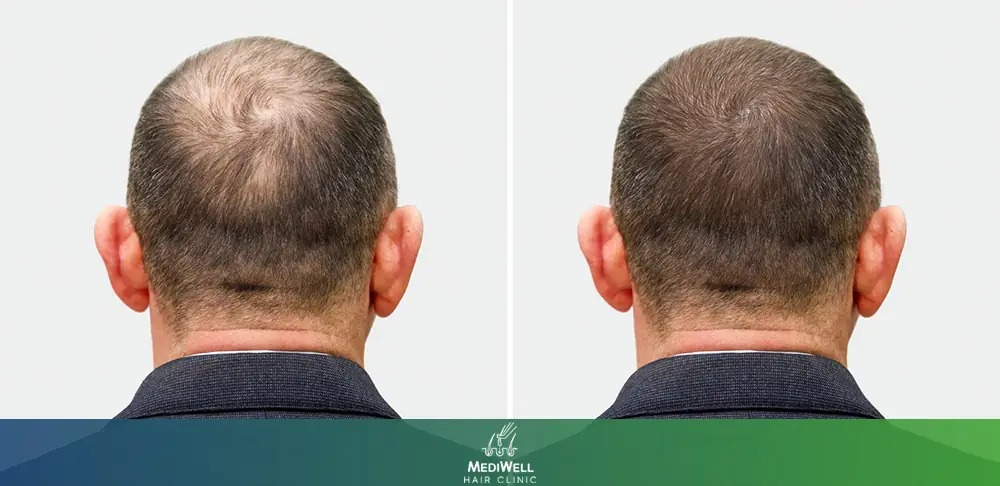
What is a Hair Graft?
A hair graft, also called a follicular unit graft, is a small group of naturally occurring hair follicles taken from a donor area and transplanted into an area affected by thinning or baldness.
A graft can contain more than one hair follicle.
Therefore, graft count and hair count are not the same thing.
For example, a procedure involving 2,000 grafts does not necessarily mean exactly 2,000 individual hairs are transplanted. Each graft may contain one, two, three or sometimes more hairs.
This is one reason why simply comparing two clinics by “price per graft” can produce an incomplete picture.
The clinically relevant question is not only:
“How much does each graft cost?”
It is also:
“Why have I been recommended this number of grafts, and how will those grafts be used to achieve a natural-looking result while protecting my donor area?”
Does the Number of Grafts Determine the Price?
It often has a major influence, but it is not the only factor that determines the final cost.
Many UK clinics use a per-graft pricing model, while others use fixed or procedure-based pricing. Pricing structures can therefore vary considerably between clinics.
As a simplified example:
| Estimated Graft Requirement | What It May Involve |
|---|---|
| 1,000 grafts | Small area or early hairline restoration |
| 1,500 grafts | Hairline refinement or limited recession |
| 2,000 grafts | Hairline and some mid-scalp work |
| 2,500 grafts | More substantial frontal/mid-scalp restoration |
| 3,000+ grafts | Larger areas of hair loss or more extensive restoration |
These figures should not be interpreted as a prescription.
The number of grafts required can only be properly estimated after assessing the patient’s hair loss pattern, donor area, hair characteristics and desired outcome.
This is also why a reputable consultation should focus on treatment planning rather than simply selling a predetermined number of grafts.
Is a More Expensive Hair Transplant Better?
Not necessarily. Price alone cannot tell you whether a hair transplant is clinically appropriate or likely to provide good value.
A higher quotation may reflect factors such as greater surgeon involvement, a more complex case, a particular clinic location, higher operating costs or more comprehensive aftercare.
Conversely, a very low quotation may reflect a different staffing model, fewer inclusions, a promotional price or a procedure where the patient’s expectations and the proposed treatment have not been properly aligned.
The NHS advises patients considering cosmetic surgery to research the clinic and its team carefully rather than making the decision on price alone.
The best comparison is therefore not simply “Which clinic is cheapest?” but “What treatment am I receiving for this price, who is responsible for my care, and is the plan appropriate for my hair loss?”
What Should You Check Before Comparing Hair Transplant Prices?
Before comparing two quotations, make sure you know:
- The estimated number of grafts
- Which hair transplant technique is being recommended
- Who will perform the important stages of the procedure
- Whether the surgeon personally assesses your case
- What is included in the quoted price
- Whether medication is included
- What aftercare and follow-up are included
- Whether additional charges can arise
- Whether the plan accounts for future hair loss
- What happens if further treatment is eventually required
This creates a much more meaningful comparison than putting two headline prices side by side.
A £4,000 Quotation and a £6,000 Quotation Are Not Necessarily the Same Treatment
They may represent different treatment plans, different levels of clinical involvement or different inclusions.
This is why comparing hair transplant prices requires more than looking at the final number.
The rest of this guide will break down the individual factors that influence hair transplant cost in the UK and explain how patients can compare quotations more intelligently.
How Much Does a Hair Transplant Cost in the UK? UK Prices 2026
A hair transplant in the UK can cost approximately £1,000–£30,000, according to the NHS. In 2026, many UK clinics quote around £3,000–£15,000, with standard procedures commonly falling around £4,000–£7,000. The final cost depends on graft numbers, technique, hair-loss severity, surgeon involvement, clinic location, case complexity and what is included in treatment and aftercare.
Hair Transplant Cost UK
| Typical UK planning range | £3,000–£15,000 |
| Common standard-case range | £4,000–£7,000 |
| NHS published range | £1,000–£30,000 |
| Main cost factor | Number of grafts required |
| Other major factors | Technique, surgeon involvement, complexity, location and aftercare |
| Common techniques | FUE and DHI |
Important: A consultation is required to determine whether transplantation is appropriate and how many grafts may be needed.
Hair Transplant Cost in the UK
- There is no single fixed UK price for a hair transplant.
- The NHS reports a broad range of £1,000–£30,000.
- Many current UK quotations fall within approximately £3,000–£15,000.
- Standard procedures are often positioned around £4,000–£7,000.
- Graft requirements are one of the most important factors affecting cost.
- FUE and DHI can have different pricing structures.
- A higher graft count does not automatically mean a better result.
- The surgeon’s involvement and clinical planning matter.
- Aftercare and what is included in the quotation should be checked carefully.
- The cheapest hair transplant is not necessarily the best-value hair transplant.
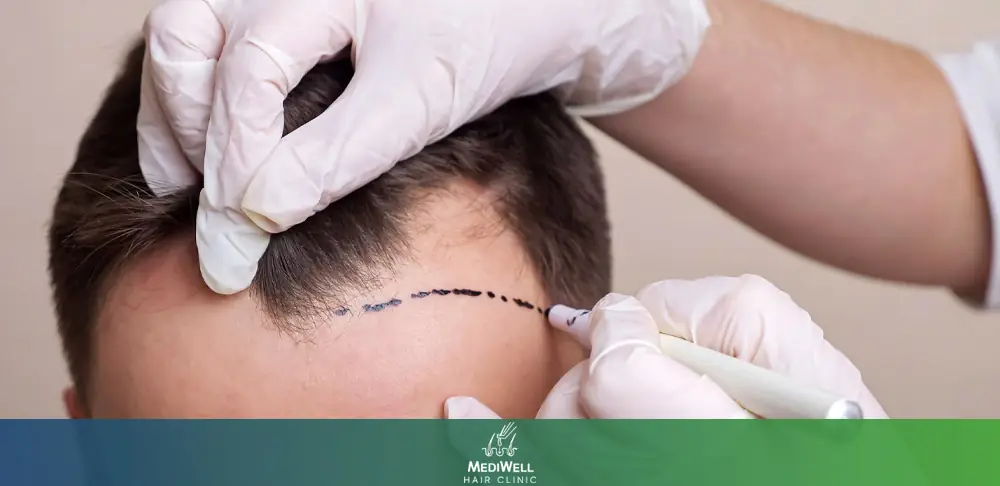
How Much Does a Hair Transplant Cost by Graft Number?
The number of grafts required is one of the biggest factors influencing hair transplant cost in the UK. However, there is no universal graft number for a particular stage of hair loss. The amount required depends on the area being treated, the existing hair density, donor supply, hair characteristics and the density and design being targeted.
As a general planning guide, UK patients may encounter pricing along these lines:
| Approx. Grafts | Typical Treatment Area | Indicative UK Planning Range* |
|---|---|---|
| 1,000 | Small hairline or limited recession | £3,000–£4,500+ |
| 1,500 | Hairline refinement or moderate recession | £3,500–£5,500+ |
| 2,000 | Hairline and part of the mid-scalp | £4,000–£7,000+ |
| 2,500 | Larger frontal or frontal/mid-scalp restoration | £5,000–£8,000+ |
| 3,000 | More extensive restoration | £6,000–£10,000+ |
| 3,500+ | Extensive hair loss or complex restoration | £7,000–£12,000+ |
*These are indicative planning ranges rather than fixed Mediwell prices or a clinical quotation. Actual prices vary according to the individual treatment plan, technique, surgeon involvement, clinic and inclusions.
Why 2,000 Grafts Does Not Cost the Same at Every Clinic
A common mistake when comparing hair transplant prices UK is to assume that 2,000 grafts at one clinic should cost approximately the same as 2,000 grafts elsewhere.
The graft number describes how many follicular units are planned, not the complete service being purchased.
A quotation may differ because of:
- surgeon involvement
- surgical team experience
- treatment complexity
- extraction and implantation method
- clinic facilities
- pre-operative assessment
- medication
- follow-up appointments
- aftercare
- included treatments
- geographical location
- whether the quoted number is genuinely appropriate for the patient’s pattern of hair loss
This means price per graft is useful for comparison, but it should never be the only comparison.
How Much Does a Hair Transplant Cost Per Graft in the UK?
Some UK clinics calculate treatment using a price per graft, while others provide a fixed package price.
A simple per-graft calculation looks like this:
Total treatment cost = number of grafts × price per graft
For example, a hypothetical quotation of £3 per graft would produce:
| Grafts | Example Calculation | Example Treatment Price |
|---|---|---|
| 1,500 | 1,500 × £3 | £4,500 |
| 2,000 | 2,000 × £3 | £6,000 |
| 2,500 | 2,500 × £3 | £7,500 |
| 3,000 | 3,000 × £3 | £9,000 |
These figures are illustrative calculations, not Mediwell Hair Clinic pricing.
The calculation becomes less useful when clinics use package pricing. A clinic might quote one price for a complete procedure regardless of whether the final plan involves a slightly different number of grafts.
Therefore, patients should ask:
Is the quotation based on a fixed package, a price per graft, or a combination of both?
That question can prevent misleading comparisons.
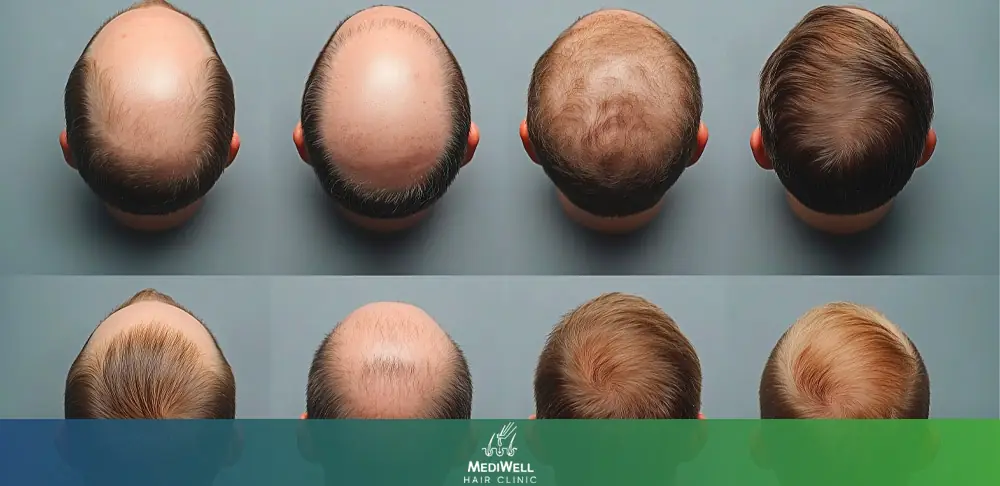
What Determines How Many Hair Grafts You Need?
The number of grafts should be determined by clinical assessment rather than a target number chosen for pricing purposes.
A surgeon or appropriately qualified clinician will consider several factors.
1. The Extent of Hair Loss
Someone with mild recession may require considerably fewer grafts than someone with extensive thinning across the frontal scalp, mid-scalp and crown.
The Norwood classification is commonly used to describe male pattern hair loss, although individual patients can differ substantially even when they have a similar classification.
Two people with the same apparent Norwood stage may therefore receive different treatment plans.
2. The Area Being Restored
The surface area requiring coverage has a direct influence on graft requirements.
A patient seeking only hairline reconstruction may need a different number of grafts from someone wanting treatment across the:
- hairline
- frontal scalp
- mid-scalp
- crown
Trying to cover a larger area with too few grafts can result in lower visual density.
However, using more grafts is not automatically the solution. Donor hair is a finite resource.
3. Donor Hair Density
Hair follicles are normally harvested from a donor area, commonly at the back and sides of the scalp.
The available donor supply influences what can realistically be achieved.
A patient with excellent donor density may have more available grafts than someone with naturally lower donor density or diffuse thinning affecting both donor and recipient areas.
This is particularly important when planning treatment over many years rather than focusing only on the immediate cosmetic result.
4. Hair Thickness and Characteristics
Hair calibre, curl or wave, colour and the contrast between the hair and scalp can influence how much coverage is visually achieved.
For example, thicker hair shafts can provide greater visual coverage than very fine hair even when the graft count is identical.
Therefore, graft numbers should be interpreted in the context of the patient’s individual hair characteristics.
5. Hairline Design
The hairline is not simply a line that needs to be filled with grafts.
Its shape, position, transition zone and density all influence whether the result looks natural.
A conservative hairline may require fewer grafts than an aggressively lowered hairline.
This is one reason why lowering the hairline as far as possible is not necessarily a better treatment strategy.
6. Future Hair Loss
This is one of the most important factors when considering how much is a hair transplant.
A transplant restores hair to selected areas, but it does not necessarily prevent existing non-transplanted hair from continuing to thin.
A treatment plan therefore needs to consider what the patient’s hair may look like in the future, not simply how many grafts can be transplanted today.
This can influence how the available donor supply is allocated.
FUE vs DHI: Does the Technique Change Hair Transplant Cost?
Yes. The technique used can influence the cost of a hair transplant, although the terminology used by clinics can make comparisons confusing.
What is FUE?
Follicular Unit Extraction (FUE) involves removing individual follicular units from the donor area before preparing and placing them into recipient sites.
FUE is widely used because it allows individual grafts to be harvested without removing a linear strip of scalp.
The final price can depend on the number of grafts, case complexity, team involvement and the specific surgical protocol used by the clinic.
What is DHI?
Direct Hair Implantation (DHI) generally refers to implantation of extracted grafts using an implantation device, often an implanter pen.
DHI is therefore not simply a completely different form of hair transplantation. It describes a particular approach to graft implantation.
Because terminology varies between clinics, patients should ask exactly what the clinic means by “DHI” and which stages are performed using that technique.
Is DHI More Expensive Than FUE?
It can be, but there is no universal UK price difference that applies to every clinic.
A higher DHI quotation may reflect the clinic’s equipment, workflow, staffing, procedure design or pricing model rather than the word “DHI” itself.
Patients should therefore avoid assuming:
DHI = automatically better = automatically worth paying more.
The more useful questions are:
- Why is this technique being recommended?
- Is it appropriate for my hair loss?
- Who performs each stage?
- How many grafts are planned?
- What is included in the quotation?
- Why is this particular approach preferable for my case?
This provides much more useful information than comparing technique names alone.
Does Sapphire FUE Cost More Than Standard FUE?
The term “Sapphire FUE” is often used in commercial hair transplant marketing to describe the type of blade used to create recipient sites.
The presence of the word “Sapphire” should not, by itself, be treated as evidence that a procedure will produce a superior result.
The outcome of a hair transplant depends on many factors, including:
- appropriate patient selection
- treatment planning
- hairline design
- graft handling
- extraction technique
- recipient-site creation
- implantation
- preservation of the donor area
- post-operative care
A clinic may charge more for a procedure described as Sapphire FUE, but the label alone does not establish that the additional cost represents better clinical value.
What is Included in a Hair Transplant Price?
This is one of the most important questions to ask before accepting a quotation.
A headline price may include some services but exclude others.
Depending on the clinic, a package may include:
| Potential Inclusion | Why It Matters |
|---|---|
| Initial consultation | Determines suitability and treatment plan |
| Hair and scalp assessment | Helps estimate graft requirements |
| Surgical procedure | Core treatment |
| Surgeon involvement | Important when assessing clinical responsibility |
| Local anaesthetic | Required for the surgical procedure |
| Medications | May be required during recovery |
| Post-operative instructions | Supports recovery |
| Follow-up appointments | Allows progress to be monitored |
| Aftercare products | May form part of the recovery programme |
| Long-term review | Can help assess future hair loss |
Not every clinic includes all of these elements.
Therefore, when comparing a £4,000 hair transplant with a £6,000 hair transplant, check the complete package before deciding which represents better value.
Why the Cheapest Hair Transplant May Not Be the Best Value
A very low advertised price can be attractive, particularly when patients are comparing multiple clinics.
But the headline figure may not reveal:
- who performs the surgery
- how many grafts are actually required
- how the donor area will be managed
- what level of surgeon supervision is provided
- whether aftercare is included
- whether the initial price is genuinely comprehensive
- whether additional treatment may be recommended later
A hair transplant is also a resource-management procedure.
The donor area contains a limited supply of follicles that may need to support the patient’s appearance for many years.
Using too many grafts unnecessarily can potentially reduce the options available for future treatment.
Consequently, the objective should not be to obtain the most grafts for the lowest price.
The objective should be to obtain an appropriate treatment plan using the available donor supply intelligently.
What Makes a Hair Transplant Good Value?
Good value is not simply the lowest price.
For a medical procedure such as hair transplantation, value is better considered as the relationship between:
Clinical suitability + treatment planning + surgical quality + patient safety + aftercare + expected long-term benefit + total cost
A cheaper procedure may represent poor value if the treatment plan is inappropriate or requires corrective work later.
Likewise, a more expensive procedure is not automatically better value.
The strongest comparison considers what you receive for the price and whether the treatment is appropriate for your individual circumstances.
Hair Transplant Cost: Questions to Ask Before Accepting a Quote
Before committing to a procedure, ask the clinic:
About the Treatment Plan
- How many grafts do I actually need?
- Which areas will be treated?
- Why has this number of grafts been recommended?
- What happens if my hair loss progresses?
- How will my donor area be protected?
About the Procedure
- Which technique will be used?
- Who performs the extraction?
- Who creates the recipient sites?
- Who implants the grafts?
- What level of surgeon involvement is provided?
About the Price
- Is the price fixed or calculated per graft?
- What exactly is included?
- Are medications included?
- Are follow-up appointments included?
- Are there any additional charges?
- Is aftercare included?
About Long-Term Planning
- What happens if I experience further hair loss?
- Is my existing hair expected to continue thinning?
- Could I require another procedure in the future?
- How will the available donor hair be managed?
These questions transform a simple hair transplant price comparison into a much more meaningful clinical comparison.
The Most Important Point About Hair Transplant Cost
The number on the quotation is only one part of the decision.
A properly planned hair transplant should balance the patient’s current appearance with their future hair-loss pattern and available donor supply.
That means the most useful question is not:
“How much is the cheapest hair transplant?”
It is:
“What treatment plan is appropriate for my hair loss, how many grafts do I genuinely need, who will perform the procedure, and what does the total price include?”
Once those questions have been answered, comparing the cost between clinics becomes considerably more meaningful.

How Much Does a Hair Transplant Cost in London?
Hair transplant prices in London are generally higher than in many other parts of the UK, but there is no single London-wide price. The final cost still depends on graft requirements, technique, clinical complexity, surgeon involvement and what the quotation includes.
Current 2026 London pricing published by clinics and specialist pricing guides shows considerable variation. Some London providers advertise procedures from around £2,500–£5,000, while premium surgeon-led services can be substantially higher. This demonstrates why a single “average London price” can be misleading.
For patients researching hair transplant cost London, a useful planning framework is:
| Treatment Size | Approximate London Planning Range |
|---|---|
| 1,000–1,500 grafts | £3,000–£5,500+ |
| 1,500–2,000 grafts | £3,500–£7,000+ |
| 2,000–2,500 grafts | £4,000–£9,000+ |
| 2,500–3,000 grafts | £5,000–£10,000+ |
| 3,000–4,000+ grafts | £6,000–£15,000+ |
These figures are market-planning ranges, not a Mediwell Hair Clinic quotation. Individual treatment plans can fall outside these ranges.
Why Can London Hair Transplants Cost More?
Several factors can contribute to higher London prices:
- higher clinic and operating costs
- specialist medical facilities
- surgeon expertise and involvement
- staffing requirements
- location
- complexity of treatment
- comprehensive aftercare
- advanced diagnostic and treatment protocols
However, a London postcode should not be treated as proof of clinical quality.
The NHS specifically recommends assessing the qualifications and experience of the surgeon and checking the relevant clinic registration rather than choosing a provider simply because it appears prominently online.
Does Hair Transplant Cost More in London Than the Rest of the UK?
Often, yes, but the difference is not absolute.
Hair transplant pricing varies between London, Manchester, Birmingham, Leeds, Edinburgh, Glasgow and other UK locations. The clinic’s business costs and local market are factors, but the treatment itself is still primarily driven by the patient’s individual requirements.
A patient requiring 2,500 grafts does not suddenly need more grafts because they live in London.
What may change is the cost of delivering the treatment, including premises, staffing, surgeon availability and the overall clinical model.
This creates an important distinction:
Location can influence the price of treatment, but it should not determine whether the treatment is clinically appropriate.
Hair Transplant UK vs Turkey: Is It Really Cheaper Abroad?
Hair transplant treatment in Turkey can be considerably cheaper than treatment in the UK, but comparing the headline prices alone does not provide a complete cost comparison.
Turkey is a major destination for medical tourism, and many clinics advertise all-inclusive packages covering the procedure, hotel and transfers. Some current 2026 Turkish packages are advertised from below £3,000, while UK prices for comparable-looking procedures can be considerably higher.
At first glance, this can make travelling abroad appear to offer an obvious financial advantage.
However, patients should calculate the total treatment cost, rather than simply comparing the surgical package.
What Should You Add to the Cost of a Hair Transplant Abroad?
A realistic comparison may need to include:
- Flights
- Airport transfers
- Accommodation
- Additional nights if recovery takes longer
- Travel insurance
- Medication
- UK follow-up appointments
- Potential return travel
- treatment for complications
- Possible revision surgery
- Time away from work
The NHS specifically warns that cosmetic surgery abroad can involve additional risks and that overseas clinics may not provide follow-up care to the same standard or may not have a healthcare professional available in the UK if problems occur.
This does not mean that every overseas clinic is unsafe or that patients should never consider treatment abroad.
It means the decision should be based on clinical quality, safety, credentials, treatment planning and aftercare, rather than price alone.
Why Aftercare Matters When Comparing Hair Transplant Prices
Aftercare is sometimes treated as an additional service when comparing hair transplant packages.
Clinically, it is part of the overall treatment journey.
The NHS advises patients to understand what follow-up care they will receive and what happens if something goes wrong.
This matters because hair transplantation does not end when the grafts have been implanted.
Patients need appropriate instructions for:
- protecting newly transplanted grafts
- washing the scalp
- managing expected swelling and scabbing
- returning to normal activities
- recognising potential complications
- monitoring growth
- assessing the long-term result
The NHS notes that transplanted hair commonly begins to appear from around four months, while the full result may take 10–18 months to become apparent.
Therefore, a clinic offering a lower upfront price but limited follow-up should not automatically be considered cheaper overall.
What Does a Hair Transplant Consultation Tell You About the Price?
A proper consultation should explain why a particular treatment plan has been recommended, rather than simply providing a price.
The clinician should assess factors such as:
- the pattern and extent of hair loss
- donor hair availability
- hair density
- hair calibre
- the areas requiring treatment
- existing hair
- future hair-loss risk
- the patient’s expectations
- suitable treatment techniques
The NHS recommends consulting the person who will perform the procedure before making a final decision and advises patients to ask about qualifications, experience, complications, aftercare and the total cost.
Why a Consultation Can Change the Price
An online calculator may suggest that you require 2,000 grafts.
A clinical assessment may conclude that:
- 2,000 grafts would be insufficient for the intended area;
- fewer grafts could achieve the desired result with a different design;
- the donor area requires more cautious management;
- treatment should be staged;
- additional medical management should be considered first;
- transplantation may not currently be appropriate.
This is why a personalised quotation should follow assessment rather than replace it.
Can You Have a Hair Transplant If You Are Still Losing Hair?
Potentially, but ongoing hair loss is an important consideration when planning treatment.
A transplant moves existing hair follicles from one area to another. It does not necessarily stop the underlying process causing non-transplanted hair to thin.
This creates a long-term planning issue.
If a patient receives an aggressively lowered hairline at a young age but continues to lose hair behind the transplanted area, the result may become less balanced over time.
The NHS specifically notes that hair can continue to thin around transplanted areas and that the transplant design should account for how the hair may look as time passes.
Why Long-Term Planning Can Affect Hair Transplant Cost
A responsible treatment plan may prioritise:
Current appearance → donor preservation → future hair loss → long-term density → potential future treatment
This can mean using fewer grafts initially rather than exhausting the available donor supply in a single procedure.
Therefore, the cheapest way to achieve the maximum immediate coverage is not necessarily the best long-term strategy.
Who Should Perform a Hair Transplant?
The person responsible for your procedure matters at least as much as the advertised technique or price.
The NHS advises patients to choose a surgeon who is appropriately qualified and experienced in hair transplantation. In England, doctors should be registered with the General Medical Council (GMC) and hold a licence to practise. The NHS also recommends checking the relevant clinic or hospital’s Care Quality Commission (CQC) registration.
Patients should ask:
- What qualifications does the surgeon have?
- How much hair transplant experience do they have?
- How many procedures have they performed?
- Who will actually perform the extraction?
- Who creates the recipient sites?
- Who implants the grafts?
- What happens if complications occur?
- Who provides follow-up care?
These questions can reveal substantial differences between apparently similar packages.
Is Hair Transplant Surgery Available on the NHS?
Hair transplantation is generally not available through the NHS because it is considered cosmetic surgery.
This means patients considering a transplant normally need to arrange and fund treatment privately.
The NHS does, however, provide useful patient-safety guidance around choosing cosmetic surgery providers, understanding risks and checking practitioner credentials.
This is particularly useful when comparing private hair transplant clinics because price information alone cannot establish whether a treatment provider is suitable.
What Are the Risks of Choosing a Hair Transplant Based Mainly on Price?
Choosing a clinic entirely on price can mean overlooking important factors.
Potential problems can include:
- inappropriate graft planning
- poor hairline design
- excessive harvesting from the donor area
- inadequate management of existing hair loss
- unexpected additional costs
- insufficient aftercare
- complications requiring further treatment
- disappointing cosmetic results
The NHS describes hair transplantation as generally safe but notes that, like any operation, it carries risks including bleeding, infection and reactions to anaesthetic. It also notes the possibility of graft failure and noticeable scarring.
This is why responsible clinics should discuss risks, limitations and realistic expectations before treatment, rather than presenting transplantation as a guaranteed cosmetic solution.
How Long Does a Hair Transplant Take to Show Results?
The cost of treatment should also be considered alongside the time required to see the final result.
Hair transplantation is not an instant cosmetic procedure.
The NHS reports that:
| Recovery Stage | Typical Timeframe |
|---|---|
| Initial scalp recovery | First few days |
| Gentle washing | Around day 6 |
| Stitches removed where applicable | Around 10–14 days |
| Temporary shedding | After a few weeks |
| New growth begins | Around 4 months |
| Full result develops | Around 10–18 months |
Individual recovery and growth vary.
The transplanted hair may initially shed before new growth develops. This can be normal and does not necessarily indicate that the transplant has failed.
Patients should therefore evaluate the price of a hair transplant as an investment in a long-term treatment process, not an immediate before-and-after transformation.
Hair Transplant Cost: The Price Is Only One Part of the Decision
A hair transplant is a personal medical procedure, so the right treatment plan will differ from patient to patient.
The most meaningful cost comparison considers:
Graft requirements + technique + surgeon involvement + clinical planning + donor preservation + aftercare + long-term strategy
rather than simply comparing advertised package prices.
For someone researching how much a hair transplant costs, the most useful next step is therefore not necessarily to find the lowest number online.
It is to establish what treatment is actually appropriate, how many grafts are genuinely required and what is included in the final quotation.
Mediwell Hair Clinic: A Patient-Focused Approach to Hair Transplant Cost
At Mediwell Hair Clinic, the price of a hair transplant should be understood in the context of the treatment plan rather than as an isolated number.
The clinic’s published 2026 pricing information currently places London hair transplant costs broadly within £3,000–£12,000, depending on graft numbers, technique and surgeon expertise, with published examples covering FUE, Sapphire FUE and DHI treatment options.
The important distinction is that the final treatment plan should be based on the patient’s requirements rather than choosing a procedure solely because it appears cheaper or more advanced.
For patients comparing options, the consultation should help establish:
- how extensive the hair loss is;
- how many grafts may be required;
- which technique is appropriate;
- how the donor area should be managed;
- what is included in the treatment;
- what aftercare is provided;
- and how the plan fits the patient’s longer-term hair restoration goals.
This patient-centred approach is particularly important because a hair transplant is difficult to evaluate purely by its initial price.
Is a Hair Transplant Worth the Cost in the UK?
For the right patient, a hair transplant can be a worthwhile long-term investment, but its value should not be judged by price alone.
A successful transplant can restore hair to areas affected by permanent hair loss and create a more natural-looking hairline or improve scalp coverage. However, results depend on factors such as patient suitability, donor hair quality, graft planning, surgical technique and long-term hair-loss management.
The NHS describes hair transplantation as a cosmetic procedure and advises patients to carefully research the surgeon, clinic, risks, expected results and follow-up arrangements before proceeding.
The key question is therefore not:
“Is a hair transplant expensive?”
It is:
“Is the treatment plan appropriate for my hair loss, and does the total cost represent good clinical value?”
What Makes a Hair Transplant Good Value?
A hair transplant represents better value when the price is supported by a properly planned treatment pathway.
Patients should consider:
- appropriate patient assessment
- realistic graft planning
- experienced surgical care
- suitable technique selection
- careful donor-area management
- natural hairline design
- transparent pricing
- comprehensive aftercare
- long-term follow-up
- realistic expectations
A low price can become poor value if important elements are excluded or if inappropriate graft planning creates problems later.
Equally, a premium price is not automatically justified simply because a clinic uses terms such as “advanced”, “premium”, “Sapphire” or “DHI”.
The quality of the overall treatment plan matters more than a marketing label.
Why Choose Mediwell Hair Clinic for a Hair Transplant in London?
Mediwell Hair Clinic provides hair transplant treatment in London, allowing patients to access specialist treatment without travelling abroad for surgery.
The clinic currently offers Micro Sapphire FUE, DHI and Hybrid Hair Transplant options, with treatment plans tailored around the patient’s hair-loss pattern, graft requirements and desired outcome.
Mediwell’s current published packages include:
| Treatment | Published Price | Graft Allowance | Follow-up |
|---|---|---|---|
| Micro Sapphire FUE | £2,999 | Up to 3,000 grafts | 12 months |
| Micro Sapphire FUE | £3,599 | Up to 5,000 grafts | 12 months |
| DHI | £3,899 | Up to 3,000 grafts | 12 months |
| DHI | £4,799 | Up to 5,000 grafts | 12 months |
| Hybrid Technique | £3,599 | Up to 3,000 grafts | 12 months |
The current packages also list elements such as PRP sessions, post-operative care products and other treatment-related inclusions. Patients should confirm the exact package and inclusions applicable to their individual treatment before booking.
This is important when comparing prices because a headline figure should always be assessed alongside what the package actually contains.
Mediwell Hair Clinic: Transparent Hair Transplant Pricing
Mediwell’s current UK pricing guide places hair transplant costs broadly between £3,000 and £15,000, depending on graft count and clinical complexity, while its dedicated London pricing information gives a typical range of £3,000–£12,000.
The clinic’s currently published package prices provide a more specific starting point for patients considering treatment.
However, a package price should not replace individual assessment.
The number of grafts required depends on the patient’s hair-loss pattern, donor capacity, hair characteristics and treatment goals.
A consultation can therefore establish whether a particular package or technique is appropriate.
Why Have Your Hair Transplant in London Instead of Travelling Abroad?
One of the main advantages of having treatment in London is continuity of care.
Patients travelling abroad for treatment may need to return home shortly after surgery. This can make face-to-face follow-up more difficult if questions or concerns arise during recovery.
Choosing a London clinic can provide:
- easier access before treatment
- local consultation
- straightforward communication
- convenient post-operative reviews
- easier access to the clinic if concerns arise
- no international travel immediately after surgery
Mediwell’s current treatment model combines London-based care with specialist Turkish hair transplant expertise.
The benefit for a patient is not simply avoiding a flight.
It is having the treatment and subsequent care within the same healthcare environment.
Your Hair-Loss Pattern
The clinician should assess where hair has been lost and whether the pattern is consistent with permanent hair loss suitable for transplantation.
Your Donor Area
The donor area needs to be assessed carefully because it provides the grafts used for transplantation.
Your Treatment Goals
A natural hairline, increased density or restoration of specific areas may require different approaches.
Your Long-Term Hair Loss
Existing hair can continue to thin after transplantation.
The NHS specifically advises that transplant design should take future hair loss into account so that the result remains natural as time passes.
Your Graft Requirement
Only after assessing these factors can a realistic graft estimate and treatment quotation be established.
Is Everyone Suitable for a Hair Transplant?
No. A hair transplant is not suitable for every type or cause of hair loss.
The NHS states that transplantation is generally suitable for permanent baldness, including hereditary hair loss, but is not usually suitable for some other causes of hair loss, such as alopecia areata.
This is another reason why an online price calculator cannot replace a proper consultation.
Before discussing how much a procedure costs, the first question should be:
“Is a hair transplant medically appropriate for me?”
When Will You See the Final Hair Transplant Result?
Hair transplantation requires patience.
The NHS states that transplanted hair often sheds after a few weeks, new hair usually begins to appear after around four months and the full result should be visible after approximately 10–18 months.
A simplified timeline is:
| Stage | What Patients May Experience |
|---|---|
| First days | Swelling, tenderness and early graft recovery |
| First 2 weeks | Grafts require careful protection |
| Following weeks | Transplanted hairs may shed |
| Around 4 months | New growth may begin |
| 6–9 months | Progressive improvement |
| 10–18 months | Full result develops |
Individual growth rates vary.
This is why before-and-after photographs should always be interpreted according to how long after surgery the photograph was taken.
Frequently Asked Questions About Hair Transplant Cost
How much does hair plant surgery cost in the UK on average?
On average, hair plant surgery costs in the UK range between £3,000 and £8,000, depending on the number of grafts required, the technique used (such as FUE or DHI), and the surgeon’s expertise. At Mediwell Hair Clinic in London, transparent pricing starts from £2,999, ensuring clear costs with no hidden fees.
What is the average cost of hair plant surgery per graft in London?
In London, the average cost per graft for hair plant surgery typically ranges from £2 to £5. For example, a standard procedure requiring 2,000 grafts usually costs between £4,000 and £6,000.
Are there any hidden fees involved in hair plant surgery costs?
At reputable clinics, your initial quote should cover the full procedure. A comprehensive hair plant surgery cost typically includes the pre-operative consultation, local anaesthesia, the surgical procedure, aftercare products, and post-surgery follow-up appointments.
Is hair plant surgery covered by health insurance or the NHS in the UK?
In the UK, hair plant surgery is considered a cosmetic procedure and is generally not covered by the NHS or private health insurance. However, many UK clinics offer flexible 0% finance payment plans to help spread the cost over monthly installments.
How much does a hair transplant cost in the UK?
A hair transplant in the UK can cost approximately £1,000–£30,000, according to the NHS. In 2026, many private-clinic prices fall within roughly £3,000–£15,000, depending on graft numbers, technique, surgeon involvement, clinic location and treatment complexity. London prices can be higher. The most accurate quotation requires an individual assessment of the patient’s hair loss and donor area.
How much does a 2,000-graft hair transplant cost?
A 2,000-graft hair transplant can cost approximately £4,000–£8,000 in UK planning terms, although actual quotations vary according to technique, surgeon involvement, clinic and inclusions.
How much does a 3,000-graft hair transplant cost?
A 3,000-graft procedure can commonly fall around £6,000–£10,000+ in UK planning terms. Some clinics offer package pricing that can differ substantially from a strict per-graft calculation.
How much does a hair transplant cost in London?
London hair transplant prices vary considerably. A practical planning range is approximately £3,000–£12,000+, depending on graft numbers, technique, surgeon expertise and what is included. Mediwell’s current published packages start from £2,999.
Is FUE cheaper than DHI?
Not necessarily. FUE and DHI can have different pricing structures, but the cost depends on graft numbers, treatment complexity, clinic and the specific surgical approach. The technique should be selected according to the patient’s needs rather than price alone.
Is DHI worth the extra cost?
It depends on the individual treatment plan. DHI uses an implantation approach that differs from conventional FUE implantation. A higher price does not automatically mean a better result. The important question is whether the technique is appropriate for the patient’s hair loss and treatment goals.
Is Sapphire FUE better than normal FUE?
The term Sapphire FUE refers to the type of blade used for recipient-site creation. The label itself does not guarantee a superior result. Treatment planning, graft handling, surgical skill, donor management and appropriate aftercare remain important.
How many grafts do I need?
There is no universal graft number. The requirement depends on the extent of hair loss, treatment area, donor density, hair characteristics, desired density and long-term hair-loss pattern.
Does more grafts mean a better hair transplant?
No. More grafts may provide greater coverage when clinically appropriate, but using excessive grafts can unnecessarily consume limited donor resources. The objective should be appropriate graft distribution rather than the highest possible graft count.
Is a hair transplant permanent?
Transplanted follicles are intended to provide a long-lasting result, but non-transplanted hair can continue to thin. Long-term planning is therefore important. The NHS specifically advises that transplant design should account for future hair loss.
Is a hair transplant available on the NHS?
Generally, no. The NHS states that hair transplantation is cosmetic surgery and is not available through the NHS.
How long does a hair transplant take?
The procedure usually takes several hours, depending on the number of grafts and treatment complexity. The NHS notes that hair transplantation usually takes a day, while larger areas may require two or more sessions.
When do hair transplant results appear?
New hair commonly begins appearing around four months after surgery. The NHS states that full results should be visible after approximately 10–18 months.
Is a cheap hair transplant a good option?
Not necessarily. Patients should compare surgeon experience, graft planning, clinical standards, what is included, aftercare and long-term planning rather than price alone.
Is a hair transplant in Turkey cheaper than the UK?
Often, yes. However, patients should compare the complete treatment journey, including travel, accommodation, follow-up and potential complications, rather than comparing surgical prices alone.
Why are London hair transplants more expensive?
London clinics can have higher operating costs, specialist staffing, medical infrastructure and demand. However, location alone does not determine clinical quality.
What is included in a hair transplant price?
This varies by clinic. Potential inclusions include consultation, surgery, anaesthesia, medication, aftercare, follow-up appointments and additional treatments. Patients should request a complete written breakdown before booking.
Do I need a consultation before knowing my hair transplant cost?
Yes. An accurate quotation requires assessment of the hair-loss pattern, donor area, graft requirements, treatment goals and appropriate technique.
How do I choose a hair transplant clinic in the UK?
Look beyond price. Check the surgeon’s qualifications and experience, clinic regulation, treatment plan, aftercare arrangements, risks, expected results and complete cost. The NHS recommends checking relevant CQC registration in England and verifying doctors through the GMC.
This article has been prepared using recognised medical guidance and internationally accepted best practices relating to hair restoration procedures.
Table of Contents
Book a Consultation
Simply fill in your details and we’ll get in touch with you shortly.


Location Of Our Hair Transplant Clinic
Contact our hair transplant clinic, located in the heart of London, now.
- 02039 510 203
- 07947 322 737
- 1C Lansdowne Rd, N17 0LL, London